

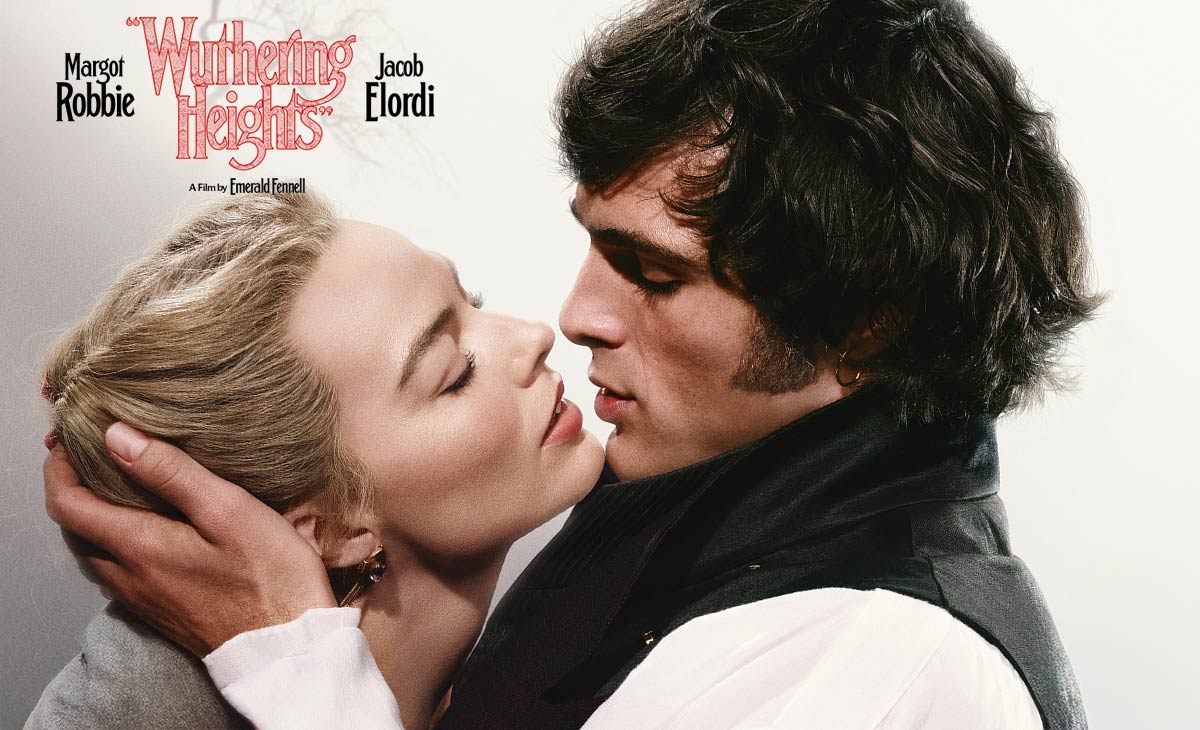
“Look, he’s got a stiffy!”
The first line spoken in Emerald Fennell’s adaptation of “Wuthering Heights”, by Emily Brontë, certainly sets the tone for the movie that follows. When your adaptation opens with a line about “a stiffy” and proceeds to stack one questionable narrative decision on top of another, it becomes less a retelling of a literary classic and more a guessing game: is this satire, shock value, or chaos disguised beneath lush cinematography? It is hard not to wonder what this “betrayal of Brontë” is trying to achieve.
Before I enthusiastically leap onto the internet’s already overcrowded hate-wagon for this movie, let me give credit where it is due: the film is undeniably entertaining, visually luxurious, and powered by an addictive soundtrack. That being said, there are certainly a few rather large elephants roaming Fennell’s moors that need addressing. It appears Fennell has constructed a strangely contradictory version of Georgian England. One where racism has conveniently disappeared, and shameless debauchery and public displays of pleasure are normalised.
Considering racial discrimination and oppression of women sit at the very heart of Brontë’s novel, it is a striking choice for Fennell to sidestep those tensions by depicting a world saturated with exaggerated perversity; as though oppression is too uncomfortable to depict, but eroticism is fair game.
This becomes even more poignant when considering Fennell’s whitewashing of Heathcliff. While cinema has a long tradition of casting Heathcliff as white, despite his clear racial ambiguity in the novel, the decision to once again whitewash him with Australian actor Jacob Elordi feels particularly burdened. In Brontë’s Wuthering Heights, Heathcliff’s otherness is central to his alienation and revenge. To render him conventionally white and desirable is not simply a casting choice, but a declaration of who gets to be romanticised in cinema. It is Fennell’s not-so-subtle reminder: a non-white man could never be the desirable and brooding lead we are meant to swoon over.
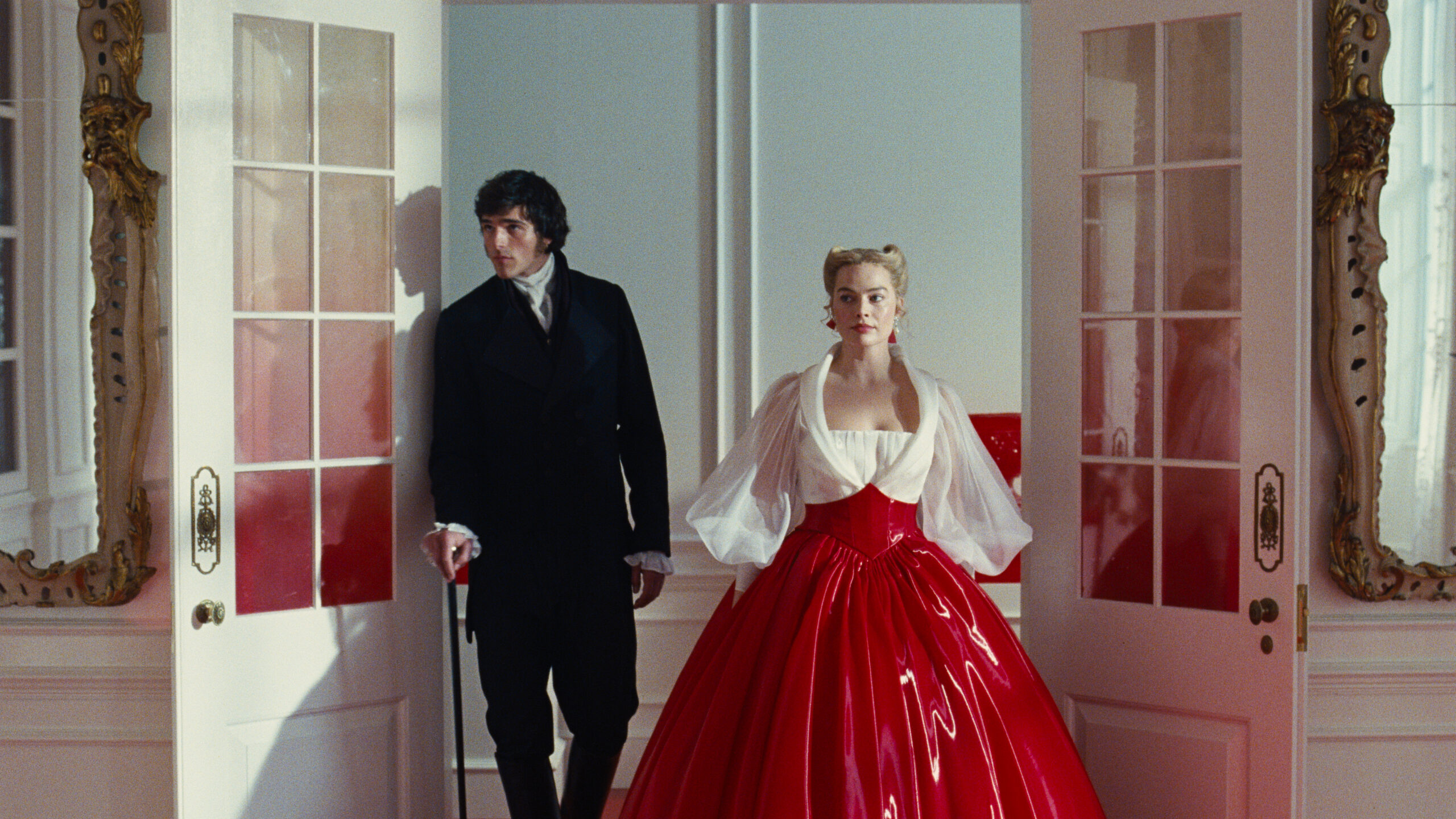
The implication of this choice is further made even more confusing when you consider Fennell’s choice to cast significant characters of colour on the sidelines, and even worse, as obstacles. Nelly (Hong Chau) is the resentful Asian maid. Edgar Linton (Shazad Latif) is the uncharismatic Pakistani husband who prevents Cathy (Margot Robbie) from being with Heathcliff. This film subtly redirects Cathy and Heathcliff’s antagonisms onto its racialised side characters, leaving the beautiful white leads to retain their tragic allure. This inevitably raises an uncomfortable question: who, exactly, are we meant to desire? Or more poignantly, what race is allowed to be brooding, complex, and worthy of our sympathy?
Fennell’s serial aestheticisation persists through Isabella, whose suffering is reframed through a BDSM-inflected lens. To be clear, there is nothing inherently wrong with depicting consensual kink in cinema. But Brontë’s Isabella is a domestic abuse victim, tortured by Heathcliff. Turning her trauma into stylised eroticism feels backward, even exploitative. In the film, her sadomasochism functions less as character development and more as an ornamental attempt to bring edginess to our white romanticised Heathcliff. Stripped of its narrative weight, Isabella’s degradation becomes spectacle. An invitation for the audience to voyeuristically delve into a kinky and forbidden world rather than reckon with the canonical brutality of her experience.
Ultimately, these choices are emblematic of a larger pattern. This adaptation reveals more about what it assumes of its audience than about the story itself. It presumes we crave flattened complexity as long as it comes wrapped in lush cinematography and salacious allusions. And, for once, Fennell is not wrong in this assumption. For centuries, society has romanticised the violent, brooding Wuthering Heights into a tale of tragic star-crossed lovers.
So, is this Wuthering Heights a betrayal of Brontë? Perhaps. But it acts more as a reflection of our cultural appetites. As we may question why this version came to be? After all, adaptations like this do not materialise in a vacuum. They are facilitated by cultural trends and audience desires. Considering the cultural frenzy sparked by the provocative surplus in Saltburn (2023), it is hardly shocking that Fennell has catered this beloved classic to a modern audience, who are seemingly more interested in the scandalous spectacle Hollywood’s white heartthrob Jacob Elordi might offer us, than in any racial brutality that is at the heart of the original story.
If this Wuthering Heights’ adaptation feels like a product of our obsession with aestheticised toxicity and hyper-sexuality, with constantly craving “the stiffy,” that is because we demanded it to be. And perhaps that is the most uncomfortable truth about this adaptation.
If you enjoyed this article, you may also enjoy – The Golden Globes: Just Glamour or The Gold Standard.
