

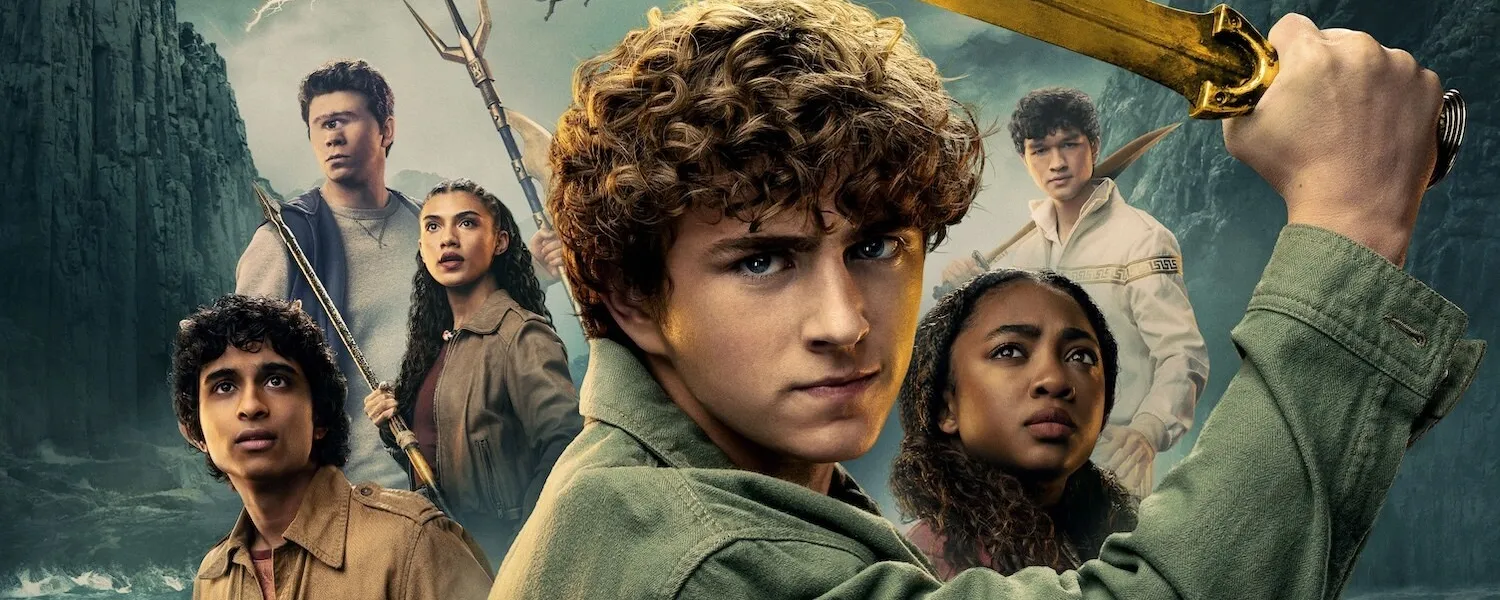
With the sheer number of reboots that have come out in recent years, it’s understandable to believe that entertainment companies have been trying to bring back the attention of the original audiences. Due to this belief, many of us have been left annoyed at the creative liberties that have been taken with these projects. I, for one, have certainly been vocal about my frustration. But something shifted for me recently when I, somewhat reluctantly (and entirely by choice), watched season two of Percy Jackson and the Olympians on Disney+. Halfway through, I caught myself asking a question I hadn’t seriously considered before: Who is this actually for?
The answer, once it landed, was simple. Not me.
I grew up reading the Percy Jackson books, and because of that, the series has left me deeply underwhelmed. Whilst a lot of the acting isn’t great (save a few), the larger issue lies with the writing. The show consistently opts to explain rather than demonstrate, as if the writers skipped the most fundamental rule of storytelling: show, don’t tell. Emotional beats are stated outright instead of being allowed to develop naturally, leaving the story feeling flat and overly instructional. Furthermore, the dialogue at times can be comically bad.
This is most clearly shown with the character of Dionysus. Watching him on screen, although he doesn’t appear very often, is frustrating, largely because I know the actor is capable of much more, and the writing wasn’t letting him show it. In the books, the version of Dionysus created by Rick Riordan was absurd, brash, and intentionally irritating. But when it truly mattered, he showed up for Percy. However, on the screen, his attitude comes off as cringy and hollow. This may be a failure of adaptation, or it may be the result of revisiting a character who was never meant to be viewed through an adult lens.
That realisation led me to the broader point: this Percy Jackson and the Olympians series is not being made for the audience that grew up with the books. The ones who felt scorned by the movies. The ones who thought the series would be the PJO franchise’s redemption. It’s being made for children. And once I accepted that, I realised a lot of my complaints no longer made sense.
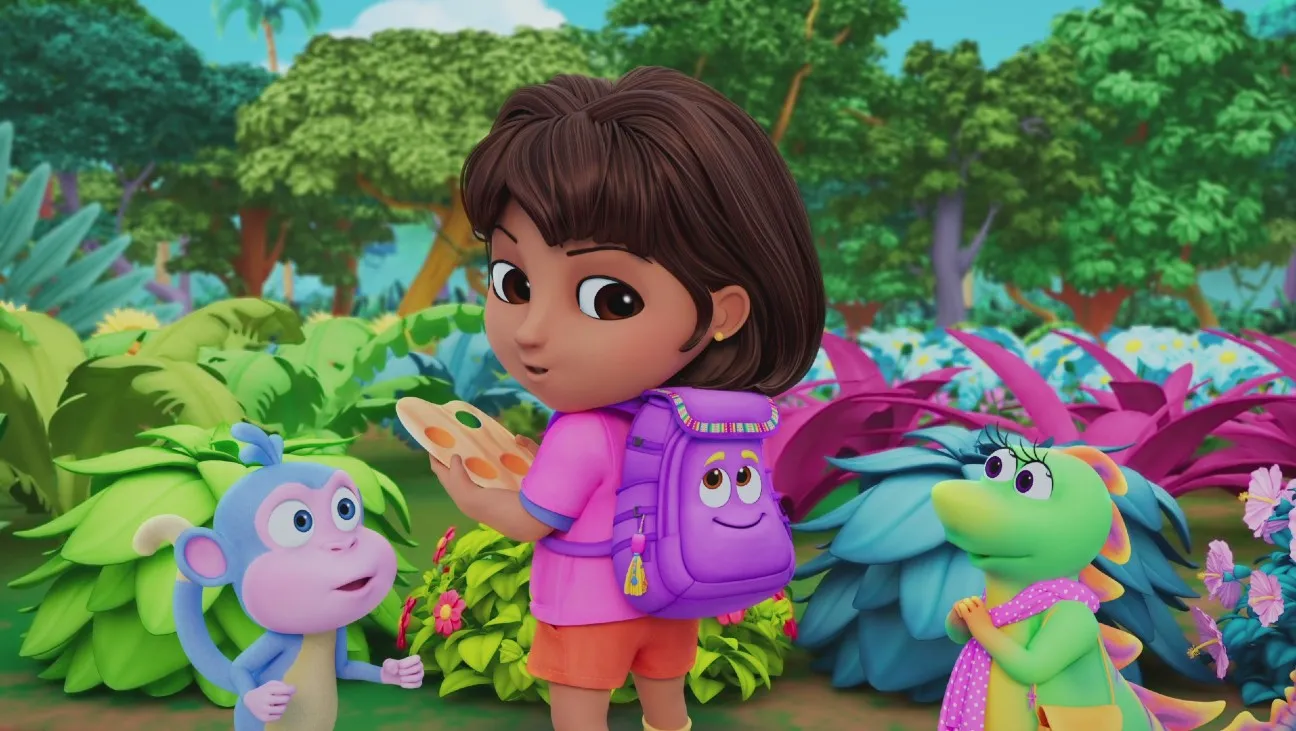
This phenomenon isn’t unique to Percy Jackson and the Olympians. Another clear example of outgrowing a target demographic is Dora the Explorer. The recent Dora (2024) reboot, frankly speaking, looks weird. I remember when news of it first came out, and many people were hating it online. But in the long run, that criticism is meaningless, because the reboot wasn’t for us. You can’t tell me that you were actually going to sit there and watch the reboot. Dora exists for children, and if children enjoy it, then it has succeeded. Our opinions simply don’t matter here. (Although I will still argue that Be Cool, Scooby-Doo! is visually unpleasant).
This is not to say that all reboots don’t intend to keep their demographics the same as the original, as the original watchers of iCarly, for example. The iCarly (2021) reboot was clearly designed with an older audience in mind; it acknowledged that its viewers had grown up and adjusted its tone accordingly. Percy Jackson and the Olympians did not, and that choice was deliberate.
The problem isn’t that reboots exist. The problem is the assumption that they are always being made for us. Sometimes they aren’t. Coming to terms with that, whilst mildly disappointing, is also a subtle and unavoidable part of growing up.
Another article you may enjoy – https://thebadgeronline.com/2026/04/saving-grace-project-hail-mary-and-how-it-has-hit-the-box-office/
