

It’s the first morning of 2026, and I’m watching a video my mum’s sent me. To mark the beginning of the year, Polish PM Donald Tusk is listing his top ten favourite things about Poland. He smirks proudly at the end, facing the camera and telling the world: “Be more like Poland!”
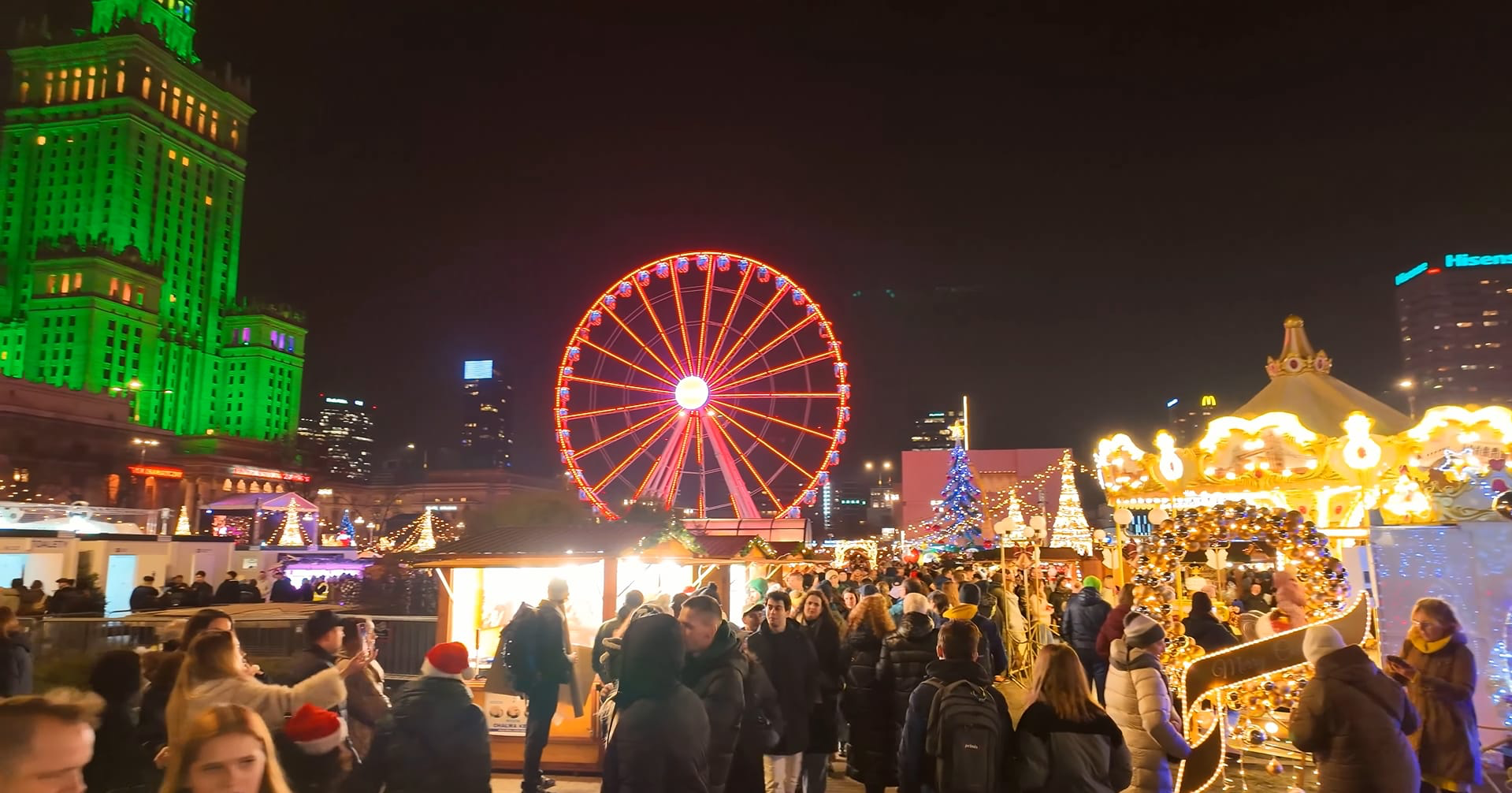
My family lives next to Warsaw, and I was intrigued to hear that he’s proud of the city being on Forbes Travel Guide’s list of Top Destinations. The entire country of Poland is indeed a rising cultural behemoth in Central Europe, so investigating its mightiest city may unearth some questions we all have. Warsaw contains a humble crowd of 1.8 million who, representing millions of tourists every year, aren’t so shy once you get to know them. During Christmastime, you’ll find its streets bustling with food stalls, Ferris wheels, and shops of all kinds.
The 22nd night of December was cold and breezy. I left the train station with a pack of golden Marlboros – only 4 quid – and headed towards the “Jarmark”, a massive winter market in the heart of Warsaw, to meet up with my old schoolmate Max and gallivant around town. He was on the edge of the plaza, mooching about, when I roared his full name gleefully. With that, the mission to explore Warsaw had begun.
We weaved in between endless families, through rows of wooden huts, incandescent with the traditional smell of steaming pierogi, Polish shish kebabs, and grilled sausages. A large Ferris wheel called Coca-Cola loomed over the square, bristling with at least 50 queuers. Endless trinket stands and tuck shops surrounded us as we ambled towards piping hot kirsch – wisniówka in Polish – a sweet and foresty cherry-flavoured alcohol that goes down smoothly and burns like a furnace. We didn’t stay for long, anxious to explore the rest of Warsaw, but the market was a 10/10 for culture. It reminded me of where Poland comes from, its cultural heritage and patrimony, and had everything I needed to warm the night up.
We set off for Nowy Swiat, or the New World Boulevard in English, to find that a dazzling infestation of electric lights had struck the city. Glowing gantries, clusters of golden Christmas mini-trees, and plenty of busy tuck shops passed us until we eventually reached a favourite back alley bar district of ours.
It’s usual surplus of energy pervaded by darkness and quiet, we lingered nevertheless and chatted with a young Indian bartender. He’d lived in Warsaw for 3 years to support his family back home, and in spite of the language barrier, he’d made friends; everyone respected him and treated him the same. It may have been a shame there were no Poles at his cricket club, but then again, it’s not exactly the national sport. ‘America’s maths team does just fine, you never know,’ we observed wryly. Making a cordial exit, we wished him good luck before heading back out to the alley, where visitors were now gradually drifting in.
Some minutes passed, and, sitting outside in the nipping cold, we were drinking beer with an old, toothless man who shared with us the secrets of Warsaw. He’d been looking for some respite from the dazzle and found our foreign existence interesting. Nicknamed Miotła – “brush,” after his scraggly grey beard – he spent an hour and a half offering the small economies of life well lived: nostalgic rock songs, his dream car (a 1994 XJ Jaguar), and where the city truly lived at night. When we probed about life under the Soviet Union, he would turn his head and begin another story. Our youthful curiosity amused him; he remarked that it made little difference which era he lived in.
Perhaps this man’s words sum up Warsaw. Christmas brings out cheer in everyone, but it doesn’t compare to the kindness of strangers who – even in strange and lonesome alleys – manage to pause and share some goodwill. In that light, Tusk’s words ring brightly in the spirit of community, reminding us to see what’s in front of us and give it a chance.
Another article you may enjoy: https://thebadgeronline.com/2026/02/jesss-rule-and-the-cost-of-reassurance/
