

What does it mean to be British? As anti-migrant narratives surge on the news and dominate social media platforms, the question holds great controversy. In recent years, with the popularity of the Reform party, the UK has seen a rise in racial hatred and intolerance. Reform UK’s rhetoric largely relies on the dehumanisation of Muslims and immigrants. Nigel Farage,
the leader of Reform UK, has been accused of racism; he states, “If you open your door to uncontrolled immigration
from Middle Eastern countries, you are inviting terrorism’’ (as reported in the Independent). Glenn Gibbins, ex- Reform candidate for Sunderland claimed that Nigerian people should be “melted down [to] fill potholes.” Reform’s policies that accentuate “stopping the boats” and “deporting all illegal immigrants,” refer to asylum seekers as an “invasion” of Britain.
Instead of such behaviour being regarded as the racist ravings of the village madman, as was the pre-2020 atmosphere during the time of UKIP, Reform’s rising popularity has birthed a normalisation of racism.
Slogans like “stop the boats,” and “send them back” ring through the streets, and a frantic yearning for repatriation hangs in the air. From 2024 to 2026, mass anti-migration protests have spread throughout the UK in great numbers. Hotels holding asylum seekers, mosques, and homes are often targeted due to far-right activists spreading misinformation on social media regarding migrant criminality.
In Rotheram, August 2024, a crowd of 750 protesters gathered outside of a hotel that held asylum seekers, which was soon set on fire. I remember summer 2024 vividly; where people of colour, assumed foreigners, were targeted by far-right crowds. People were afraid to leave their homes. It was a summer defined by violence and unrest. June of this year, Belfast saw a dystopian landscape; homes were burned down as men yelled “foreigners out.” Addresses where assumed refugees lived, were doxed and made targets of attack, but any person of colour was vulnerable.
The largest protest occurred in London, where 150,000 people followed the organiser, Tommy Robinson, who chanted ethnonationalist speech, urging the crowd to “prepare for the battle of Britain.” Although there is a tremendous amount more to say surrounding how much hurt and exploitation is involved in the issue, I want to reflect on what this means for belonging, as a person of colour in England.
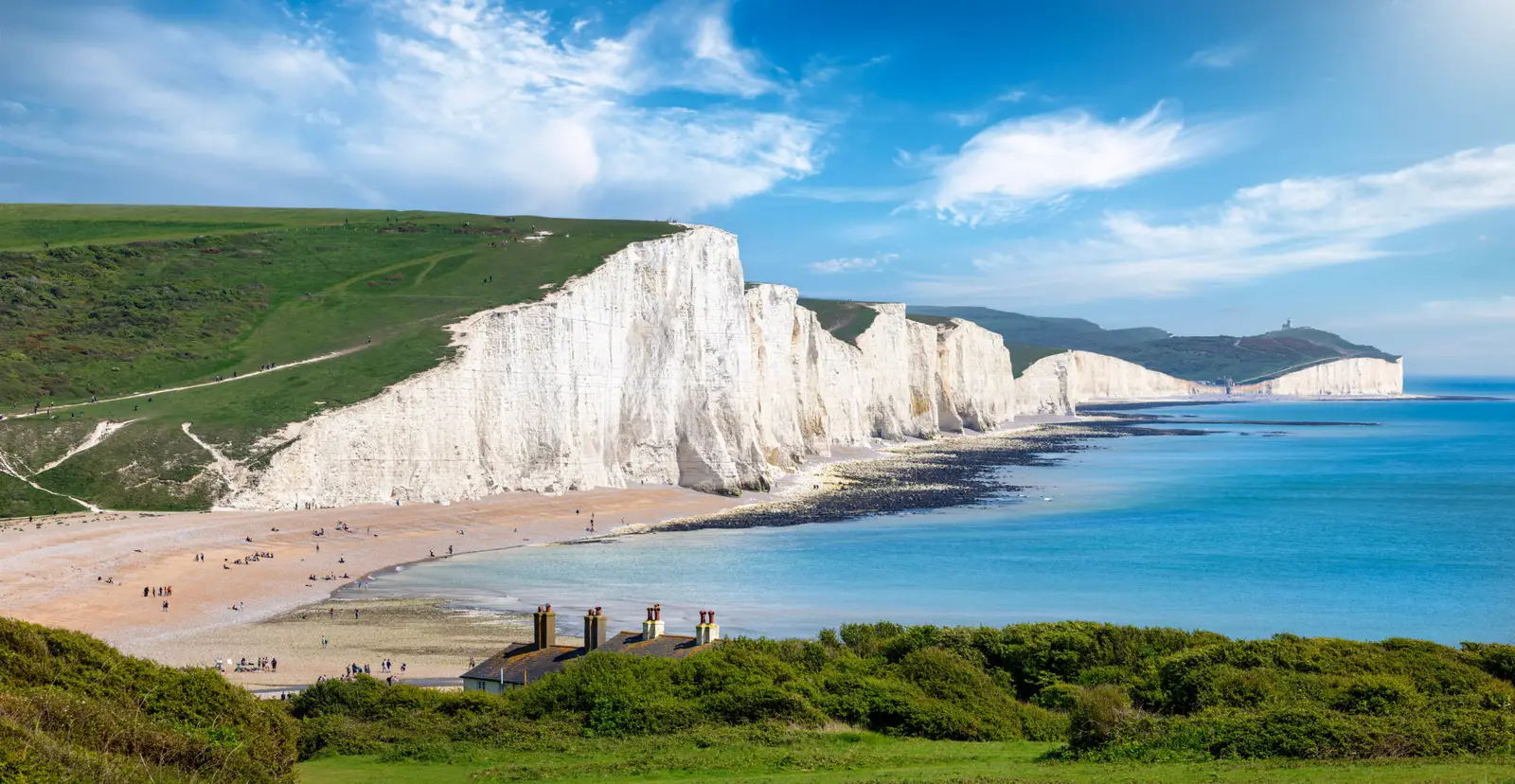
Being the daughter of a British-Nigerian mother and an Egyptian father, the shift from England’s warmth, to blatant xenophobia, has complicated my relationship with the country I was born in; the country that homes an abundance of tender nostalgia. It was not until this September, that I felt deeply heartsick. Masked men dressed in black, marched throughout Dover chanting “stop the boats” with the scene resembling something out of 1930s Germany. This time felt different because of what Dover means to me. As a child, I would often visit the white cliffs. I still go there to watch the sea, and to feel peace.
England is a feeling, and a beautiful one. I was raised in a medieval, timber-framed town. Cobblestone streets, colourful shopfronts that are tilted and wooden: navy, crimson, magenta, and forest green. Streets that are narrow and intimate, filled with guitar strings and passionate singers. Faces different and unique like book characters. Circled glasses, tattoos, smile lines, thick beards and narrowed eyebrows. Pub gardens bright in the sun; beer taps flowing with golden liquid, and creaky floors. Tudor houses, ancient Churches, bustling streets, the fresh sea air on a hot day. Clear flowing rivers and trees that line them. Tidepools teeming with colourful creatures. Pigeons strutting with crowds, and children holding bookbags beside smiling mothers and fathers. People dressed in funky outfits as if rolled out of an early 2000s film. The smell of a warm fire; summer barbeques, and winter house parties. England rain tumbling. Frosty mornings, white-tipped grass. Old books. Cultures combining, and music of all kinds, floating through the air.
England to me, in all its loveliness, has always felt warm. Sometimes I felt like I belonged, and sometimes I did not; but there was always a softness in the air. That softness, I feel, has shifted into something bitter and polarized. It is easy to feel hopeless and divided during uncertain times- but it is never too late to unite again. I choose to believe that hope is always within reach.
Another article you might like – https://thebadgeronline.com/2026/10/please-dont-take-my-tutor-away/
