
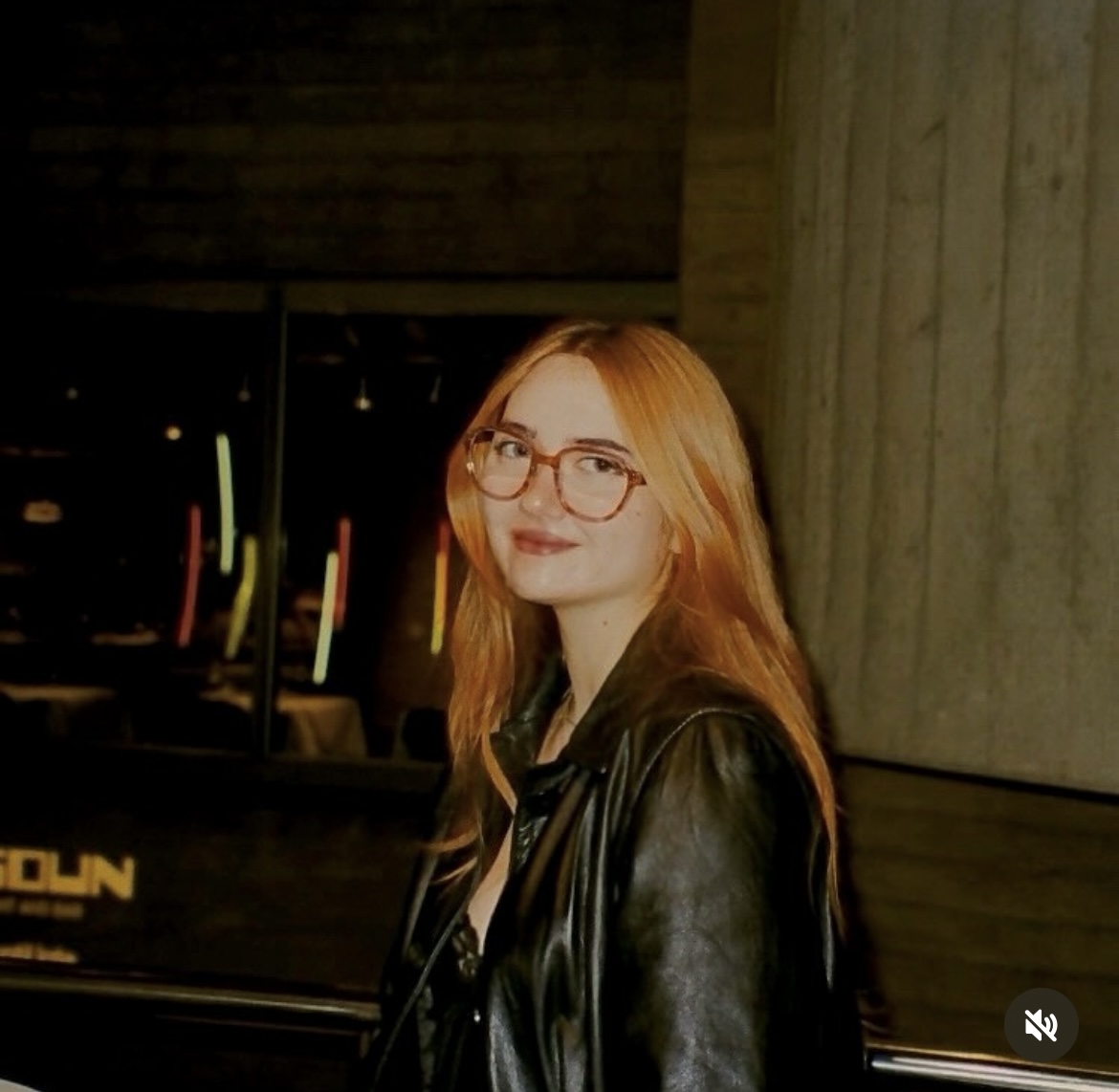
Filmmaker Orla Smith unpacks her thoughts on DIY documentaries and radical emotional honesty
An exciting documentary project by independent filmmakers Orla Smith and Kimia Ipakchi will be making its Brighton debut at Pink Moon on Monday 13th July. This personal project explores how filmmaking can be used as a form of therapy while celebrating the exciting potential of nonfiction cinema.
In advance of this screening, I had the opportunity to speak to Orla about her experience creating this project and her goals surrounding it:
In your own words, what is Tube Film and why should people come to see it?
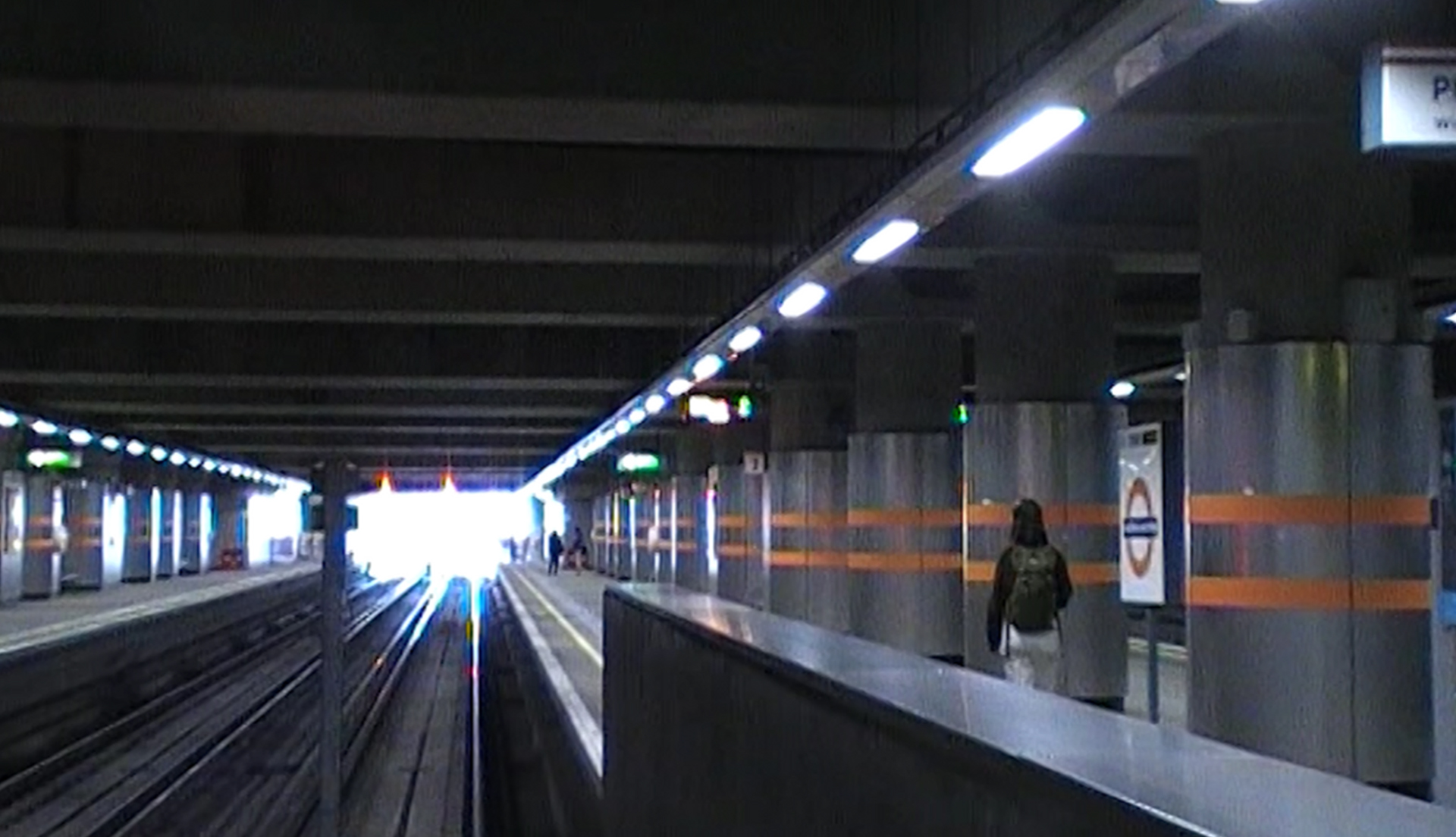
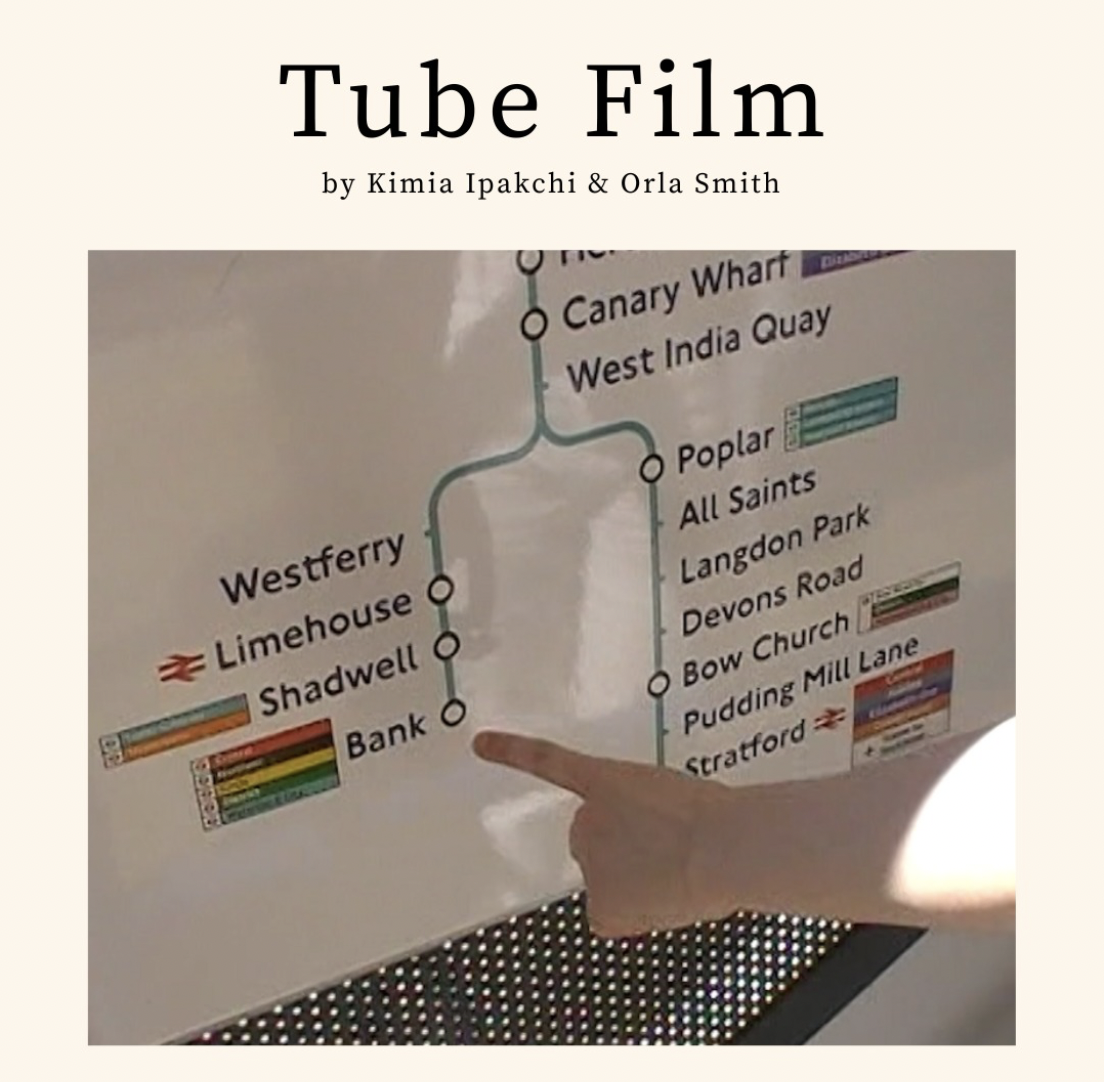
Tube Film is a personal documentary that I co-directed with my friend Kimia, in which we attempt to use filmmaking as a form of therapy. Specifically, exposure therapy: I had a fear of the Tube due to having a panic attack on the Central Line in 2023, and I didn’t go on it for 2 whole years. Last summer, I felt I was finally ready to tackle this fear. To motivate me to do it, Kimia and I decided we would film my first journey back on the Tube. We had no idea if it would become something worth editing into a final project – our primary purpose was to use the filmmaking process to aid my exposure therapy. But what we found was that the high pressure and emotions of the day bred some intense and contentious conversations between Kimia and I, and the thrill of capturing them on camera spurred me to be braver than I ever would have been if we hadn’t been filming.
The result is Tube Film: the chronicle of a day-long journey on the London transport system, tackling ideas of willpower, and what we owe to one another, and the perils and pitfalls of making personal art – all through the lens of friendship. The film has proven polarising thus far, and always inspires interesting debate (do you agree more with me or more with Kimia?), so our Q&A is sure to be a lively one.
How does it feel to put something so personal out into the world?
It’s a strange feeling, especially because I edited the film on my own, and therefore had to somewhat disassociate from the fact that that’s me on screen in order to edit myself like a character. I think that makes it a bit easier for me to watch it with audiences: I’ve already drilled into my head some distance between me and the version of me on screen. I also think I’m in a very different place in life than I was a year ago, and that helps with the disconnect.
It’s still odd to sit and watch 52 minutes of your face with a bunch of friends and strangers, and then hear them dissect it. Part of me kind of likes that, though. I think in England, a lot of us are brought up to keep quite reserved and not share a lot of details of our personal and emotional lives. I was definitely like that growing up, and found a lot of emotional outlet in watching movies instead. At a certain point in the last few years, I – for whatever reason – let go of a lot of that loyalty to reservedness, and decided to just be honest most of the time, and it’s incredibly freeing. For that reason, I get some kind of pleasure or enjoyment out of sharing my life through my films and having conversations with people afterwards. Even if they don’t like me or what I have to say in the film (I’m always curious to hear when that’s the case), it’s so much better than bottling things up. In turn, now that I’m more honest and emotionally open in my real life, I watch a lot fewer movies.
With this film, it’s also easier for me as I had Kimia as my co-pilot. Even though I’m more visible and I expose more details of my personal life, Kimia is also always present in the film through her cinematography and her voice. I can appreciate her contribution to the film in a less fraught way than mine (and I think her cinematography is so great).
What do you think is the value of non-fiction cinema? Do you think people should be watching more of it?
I think people should be watching more of it and making more of it. Kimia and I run The Creative Nonfiction Film Weekend (CNFW), a film festival in London that also does touring screenings around the UK (our Tube Film screening in Brighton is under the banner of CNFW). We screen nonfiction films that play with form and blur boundaries – films that use real life as their material, but are more interested in subjectivity than in journalistic reporting and accuracy. We basically want to excite people about documentaries and show that there’s more out there than the kinds of docs you find on TV and streaming.
It’s important to us that Kimia and I are curators and filmmakers, and the work in each of those spheres informs the other. We gravitate toward nonfiction also because we believe anyone can make it under any circumstances, and because of that, you see the perspectives of all sorts of people expressed in all sorts of ways. When the material is real life, no money or resources is actually needed to shape that into… something. Tube Film was made with no more money than it costs for two people to travel on TFL for a day (which admittedly is not cheap). You get to throw out all the rules a bit and make something that is guided by impulse. It’s so exciting for the creative process. And of course it can result in a high volume of uninteresting work, but amongst that is some of the most exciting and fresh stuff cinema has to offer.
CNFW actually also has an ongoing screening project around the UK called Chronically Online: A Personal History of the UK Internet, in which we screen online video in the cinema. We actually just did a sold out screening in Brighton at Fabrica! We do that for all the reasons listed above: because online video is another example of ordinary people using the material of their real lives to create stuff quickly, cheaply, and instinctively, without regard for what ‘film’ should look like. Some of it’s terrible, but some of it is as captivating and insightful as any film.
Why do you think that it is important for screenings to travel and what are your future screening goals?
Kimia and I are based in London, so our main annual-ish festival has (so far) lived in London. But from very early in the life of CNFW we’ve been taking our off-season programmes around the UK: so far to Manchester, Leeds, Birmingham, Bristol, Belfast, and Brighton, with more to come soon. It was a harder challenge to reach audiences in these cities because we don’t know the arts scenes as intimately as we do London’s, so in each place we’ve tried to work with local curators and curatorial groups – in Brighton, that was Fresh Perspectives for our Chronically Online screening, and now Brighton Rocks for our Tube Film screening.
When our mission is to bring more ‘creative nonfiction’ to the UK, it feels silly to sequester that just to London and expect people from around the country to come to us. We love the idea of localised film communities and making the film world (and the country in general) less London-centric (as much as we are both quite attached to London personally). With Tube Film particularly, Kimia and I, as emerging filmmakers, want to bring our film to as wide an audience as possible and understand how people around the UK might respond to it, not just in London (where the audience is also more likely to be comprised partially of people we know). And it’s a way to test the waters in each city, to see if there’s an appetite for ‘creative nonfiction’ (which would give us a reason to keep coming back).
How do you feel connected with Brighton and how do you think the people of Brighton will connect to this film?
We love Brighton – in the claustrophobia of London (and the claustrophobia of London is kind of what Tube Film is all about) it’s always so enticing to escape to the sea. As much as I’m looking forward to screening our film on Monday, I’m equally excited to be by the sea. I’ll probably get there early and take a long heatwave walk.
Brighton is an interesting one in terms of its film scene. Because it’s so close to London, it’s easier to fall prey to the London-centric mentality that people in Brighton can just take the train up if they want to see our work. I’ve heard from a lot of Brighton-based friends that they often end up coming to London to see interesting independent cinema, because screenings are thinner on the ground in their own city. We like the idea of going against that and bringing CNFW to Brighton, rather than expecting Brighton to come to us – joining in with the other independent screening groups and venues that are working to build up the city’s film scene. We’re really excited to be screening at Pink Moon, as they seem to be a big supporter of that scene!
We’re always curious to see how non-Londoners connect to a film that is very much Set In London (it’s in the name!). We had positive results when we screened the film in Belfast, but this is all quite new to us and an experiment. We’re excited to hear what the people of Brighton think! And if the response to this screening is enthusiastic enough, we’ll be back.
See Tube Film at Pink Moon on the 13th July at 7:30 pm. The screening will include an interactive Q&A session with Orla and Kimia. Tickets are £5 and available at the following link: https://discoverbrighton.org/event/tube-film-qa/