

If I must die,
you must live
to tell my story
to sell my things
to buy a piece of cloth
and some strings, (make it white with a long tail)
so that a child, somewhere in Gaza
while looking heaven in the eye
awaiting his dad who left in a blaze —
and bid no one farewell
not even to his flesh
not even to himself —
sees the kite, my kite you made, flying up above,
and thinks for a moment an angel is there
bringing back love.
If I must die
let it bring hope,
let it be a story.
Originally written in 2011, Refaat Alareer’s poem “If I Must Die” resurfaced with devastating urgency after October 2023, when Alareer was killed in an Israeli airstrike in his sister’s apartment in northern Gaza. He was forty-four. In the days following his death, the poem spread across social media and protest spaces, translated into dozens of languages to be shared worldwide. Suddenly, it was read as a self-written eulogy: a meditation on death in the face of ongoing conflict, and a guide for how meaning can endure while genocide persists.
Refaat was a literature and creative writing lecturer at the University of Gaza and a co-founder of We Are Not Numbers, a programme representing and mentoring young Palestinian writers. Working alongside like-minded scholars, he wrote from a place where even the most ordinary forms of joy and self-expression were monitored and constrained.
Yet what stands out about his writing is what it refuses to do. His poetry is never defined by grand political slogans or declarations of martyrdom. Instead, poems like “If I Must Die” turn toward something tender and innocent – a kite – asking that it be flown so that a child, who has known nothing but hardship, might look up and believe, if only for a moment, that an angel has arrived.
In one of his final interviews, Alareer described himself as an academic with no weapons. “The toughest thing I have at home is an Expo marker,” he said. If Israeli soldiers invaded, he would throw that marker at them, even if it were the last thing he did. Alareer knew that poetry would not protect him, but he wrote anyway.
After his death, his work came to exemplify what violence so often is designed to erase: hope. Poetry outlasts its author, refusing to let suffering have the final word in its legacy.
So, if art cannot save lives, why does it continue to be made in contexts where mere survival is a daily struggle?
It should not be unfamiliar to recognise how art and the individual voice are censored or left forgotten under unequal conditions of power. However, this does not mean all such self-expression disappears entirely.
Art produced during periods of extreme violence often carries a force that outweighs its time of making. From poems noted in the trenches of World War 1, dissident literature within the Soviet Union, or testimonial writing from Latin American survivors of dictatorship, mankind has repeatedly turned to language at moments when freedom of speech appears least sufficient.
When speech is surveilled, bodies are threatened, and futures are uncertain, art persists.
But what can a poem do that a photograph, a press release, or a casualty statistic cannot? The defining capacity of art is its subjectivity. Poetry does not simply report a certain event but reimagine how experiences are heard and felt. Where journalism informs, poetry transforms. Even when a reader cannot paraphrase a poem’s meaning, they may still be altered by its sound, its rhythm, or its insistence on a particular image. Moreover, understanding is not the primary demand poetry makes of us. Attention is.
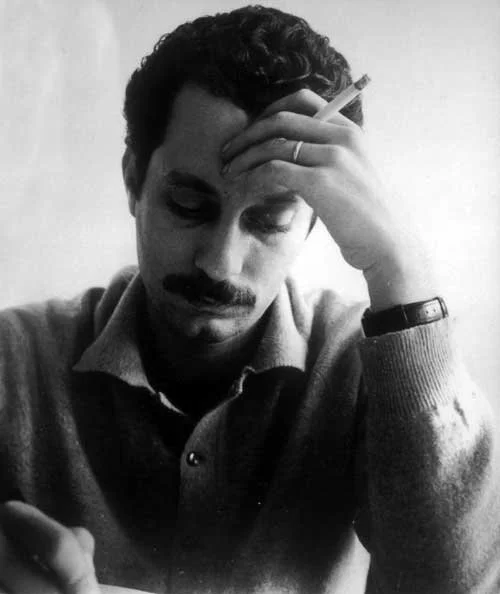
As Ghassan Kanafani argued in 1968, “the cultural form of resistance is no less valuable than armed resistance itself.” Few embody this more clearly than Palestine’s Mahmoud Darwish. Arrested and imprisoned in the 1960s for reciting poetry, Darwish wrote extensively about the enduring exile and heartache of his homeland. In his poem “Identity Card,” the speaker repeatedly asserts his subsistence in the face of a system denying it; an agentic act of declaration inscribed through language as proof of being alive.
There is a limit to the extent one can empathise with a statistic. Numbers do not have faces. Poetry restores particularity, placing a single perspective or sensation at the centre of attention and asking the reader to remain there. This is not to suggest that poetry repairs the world, but that it creates a space for understanding otherwise overlooked human experience.
This refusal is also evident in the work of contemporary Palestinian poets such as Maya Abu Al-Hayyat. Her poetry is devastating precisely because of its bluntness. In “Massacres”, the speaker explains that she no longer waits for survivors to be pulled from the rubble; she simply goes on with her day, offering no relief or catharsis to the reader. Consequently, poems such as Maya’s deny the comfort of fully formed grief, insisting instead on the visible, painfully “ordinary” reality of violence.
According to the Committee of Project Journalists, a nonprofit organisation promoting international press freedom, “more than three quarters of the ninety-nine journalists and media workers killed worldwide in 2023 died in the Israel-Gaza war, the majority of them Palestinians killed in Israeli attacks on Gaza,” while many more have been targeted or imprisoned.
The novelist and poet Hiba Abu Nada, who had written firsthand accounts of the conflict, was killed in an airstrike. Noor Aldeen Hajjaj, a young poet killed in December 2023, wrote shortly before his death that he did not consent to becoming passing news. The repeated killing of named individuals within Palestine’s community unsettles in a way that cannot be ignored. It forces us to question who is allowed to speak and what speech is impermissible. Thus, it falls to readers to listen to and preserve the humanity of those whose lives and words are imperilled.
Another article you may enjoy – https://thebadgeronline.com/2026/03/the-beat-generation-and-the-call-of-the-east/
