

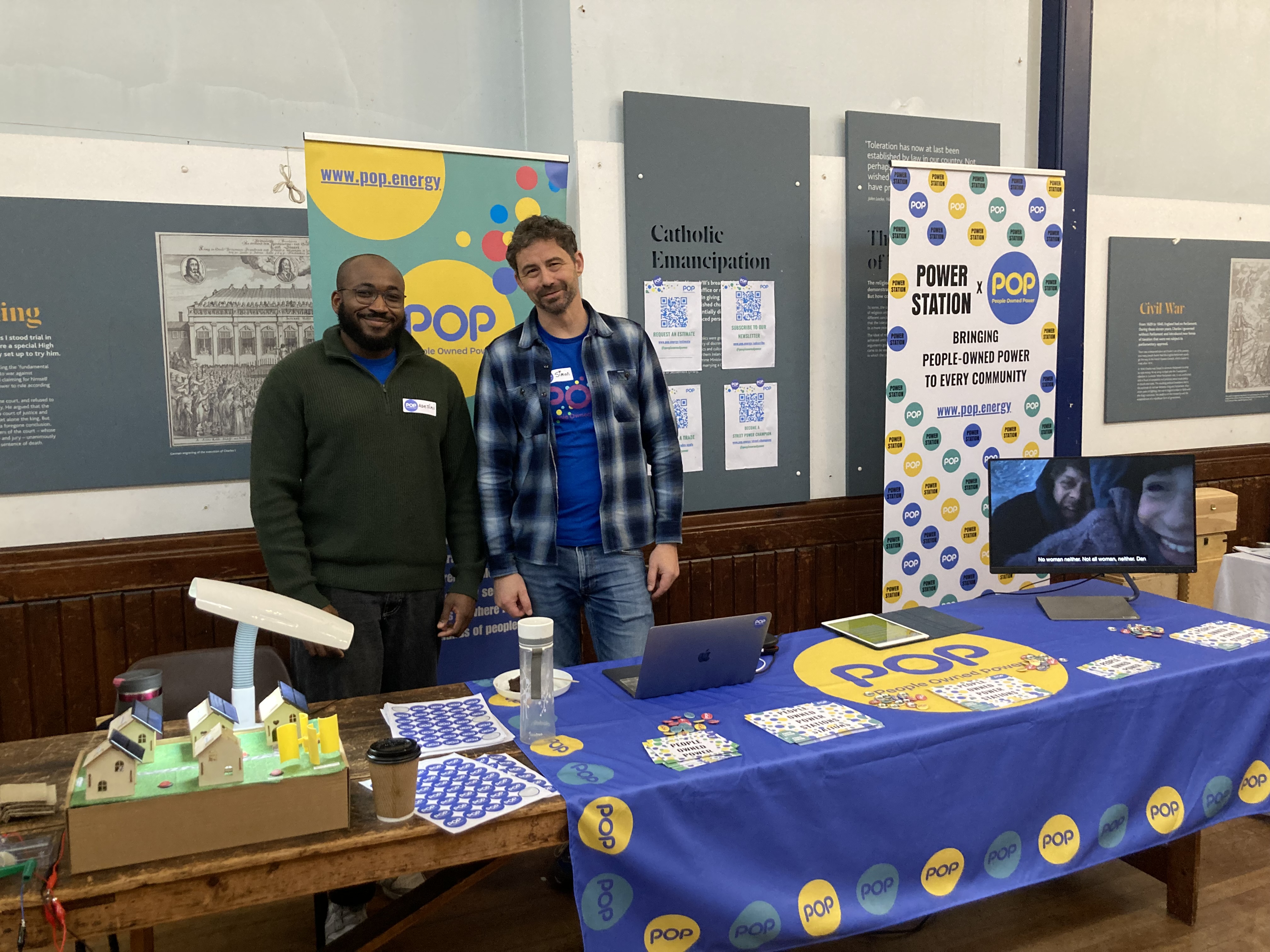
On a blustery Saturday, 29 November 2025, people from Lewes and surrounding towns gathered at Lewes Town Hall for the annual STEM festival. Open to all children and adults at no cost, the event welcomed community groups, local researchers, and companies to share their work with the public. Starting in 2016, the event has been organised by Curiosity Sussex, a local science education charity founded by Professor Stephen Wilkins at the University of Sussex, aiming to connect the general public with research happening around the local area.
The event featured stalls and exhibitions from a wide range of disciplines, including agriculture, ecology, medicine, and quantum physics, among others – each showcasing science in a different way. For example, one stall offered microscopes for examining blood films. Another exhibited lamps filled with gaseous elements, demonstrating spectrometry. The quantum physics stall featured multiple puzzles designed to teach the fundamentals of quantum physics.
Many students and researchers from the University of Brighton and the University of Sussex volunteered in the event. Local employers from STEM-related fields, such as environmental engineering and biomedical laboratory work, also attended to showcase their products, helping to pique young people’s interest in STEM careers. Community initiatives also had a strong presence, welcoming members from diverse backgrounds, such as the University of Sussex-founded Buzz Club and the Lewes Astronomical Society.
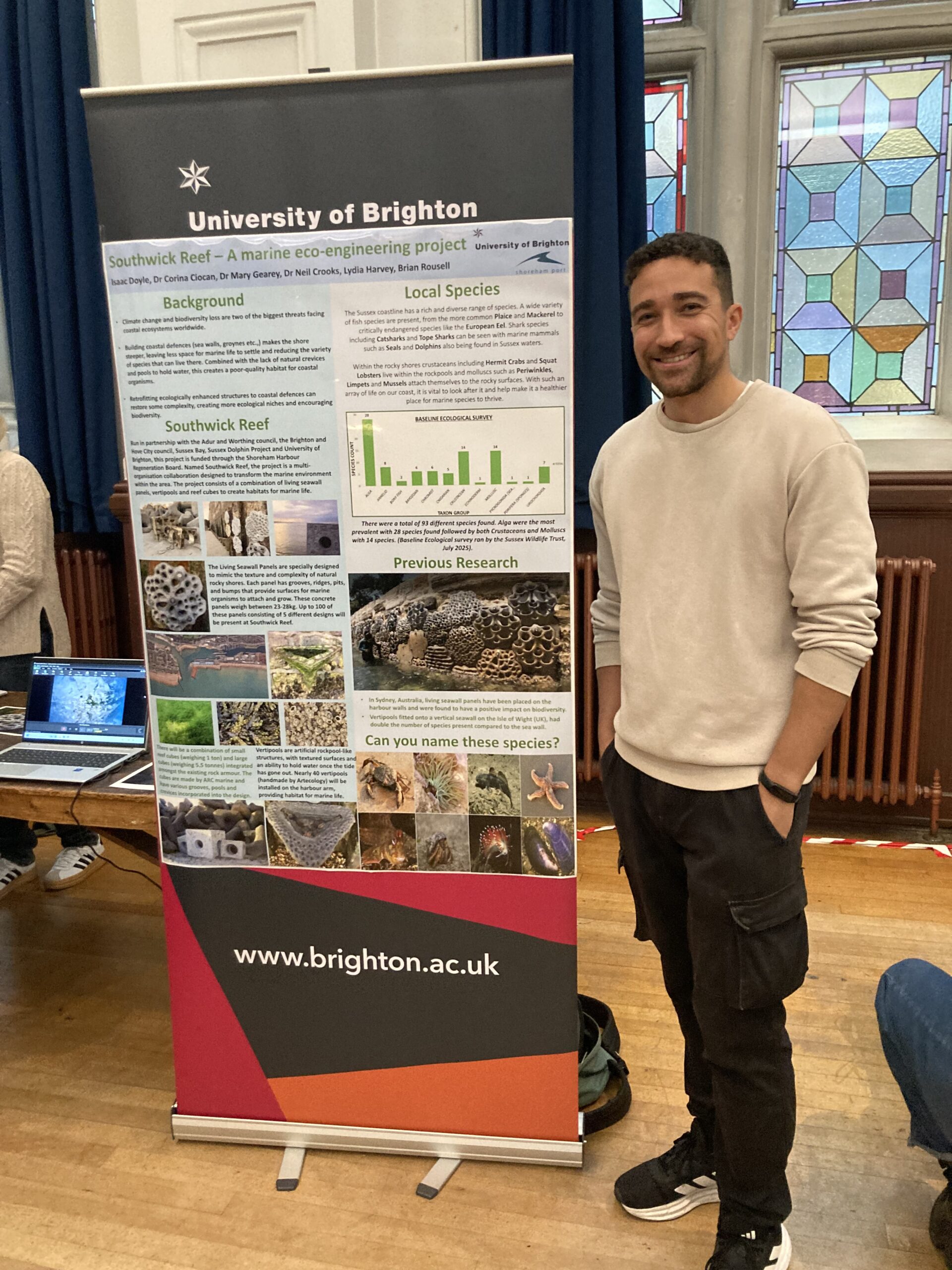
Among the stalls and exhibitions, a particularly fascinating one featured Southwick Reef, a local ecological conservation project launched in 2024 as a collaborative effort by Brighton and Hove City Council, Adur and Worthing Councils, University of Brighton, Sussex Bay, and Sussex Dolphin Project. The project aims to install an artificial reef, made of components such as living sea wall tiles, reef cubes, and vertipools, along the coastline of Shoreham Port to promote native marine biodiversity. Once the reef has been installed, the next step is to monitor any improvements in marine life. Similar projects in Australia saw a 36% increase in wildlife, including seaweed, invertebrates and fish, over two years. A 3D model of the reef cubes was available at the festival for attendees to inspect.
Beyond the conservation project, one of the most popular stalls, and also my personal favourite as a medical student, focused on diabetes. This stall was led by Professor Wendy MacFarlane of the University of Brighton and her wife, Sara MacFarlane, who supported and led the activities. Pyramids of sugar cubes were scattered across the table, and the audience was then challenged to match the correct sugar content to common foods and drinks.
It also featured cutting-edge research into one of the UK’s most common chronic conditions. The team explained that for Type 1 diabetics with frequent and severe low blood sugar episodes, a new treatment is being pioneered: this involves transplanting vital insulin-producing pancreatic cells from healthy donors into those of individuals with insulin deficiency, such as those with Type 1 diabetes. An example transplant box used to transport these cells was even on display to aid the demonstration!
The annual Lewes STEM festival proved something powerful: science should not be confined to laboratories and lecture halls – it belongs to everyone. The event stands as a testament to the power of public engagement in bridging the gap between scientists and the community, demonstrating what happens when scientists make their work accessible to the public. From medicine to quantum physics to conservation science, the Lewes STEM festival remains one of Sussex’s most valuable spaces where curiosity meets discovery, and where anyone, regardless of background, can engage with the science shaping our future.
