

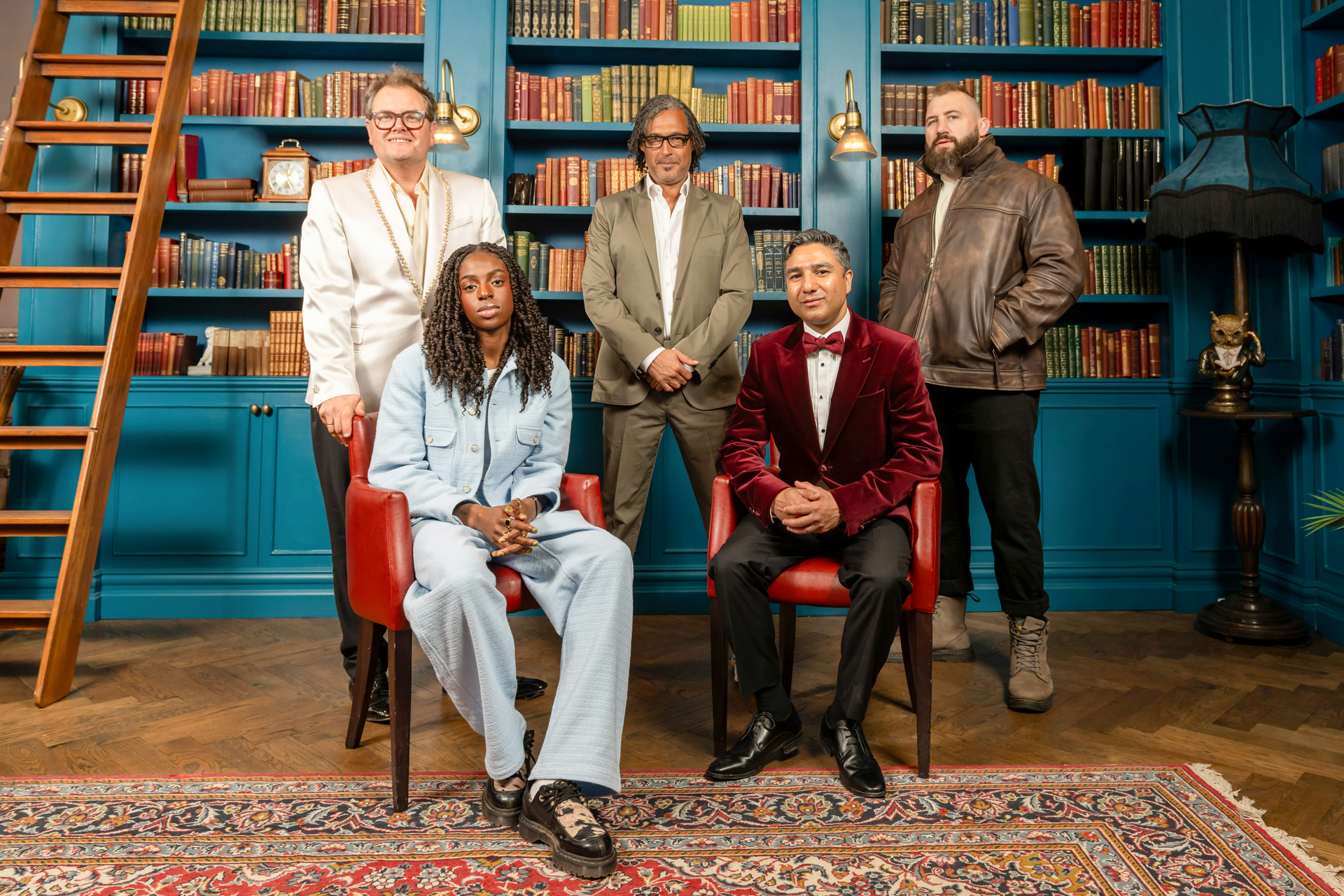
The finale of The Celebrity Traitors aired on the 6th November on the BBC, drawing over 12 million viewers and ending with talk show host Alan Carr’s shock win as a Traitor. Whilst The Traitors is known for its psychological gameplay, the celebrity edition adds extra layers of their fame and reputations being on the line. The show sparked discourse on the Internet over the Faithful’s poor judgment, with some contestants seemingly banished over their public image rather than their behaviour. Content creator Niko Omilana, for instance, was voted out because others saw him as an ‘internet prankster’.
This ties into the widely discussed ‘big dog theory,’ coined by Faithful and former rugby player Joe Marler. He argues that the show was deliberately constructed so that actor Stephen Fry would naturally assume leadership of the Faithfuls, whilst talk show host Jonathan Ross would be leader of the Traitors.
Fry was often revered by his fellow contestants, with his successful career in various pursuits giving him credibility. When his theories sometimes lacked substance, his articulate wording ensured he retained influence within the group. Ross, meanwhile, leaned on his years as a talk show host, which required quick wit and staying tuned into the room. When he was suspected earlier, he used persuasion to deflect attention from himself.
A more subtle factor in keeping these ‘big dogs’ around was the social currency they offered. Staying in the game alongside figures like Fry and Ross offered contestants valuable time with two of the industry’s most well-connected names. Fry and Ross’ influence eventually led to their downfall, as the power they had made them seem suspicious.
Amongst the large personalities, there were examples of soft power from some of the contestants. Celia Imrie, a well-established actress, carried authority but never felt too threatening. Her warmth and humour balanced out the louder personas, which earned her trust in the castle. As Imrie noted earlier, the fact that she was an older woman could make her an unsuspected traitor, which is why she was kept in the game so the Traitors could maybe use this to their advantage. Actor Nick Mohamed also seemed to establish himself as a ‘core’ traitor from the beginning, by being friendly and open to alliances, and not making his suspicions widely known. His downfall was doubting these alliances in the finale, as he was under pressure.
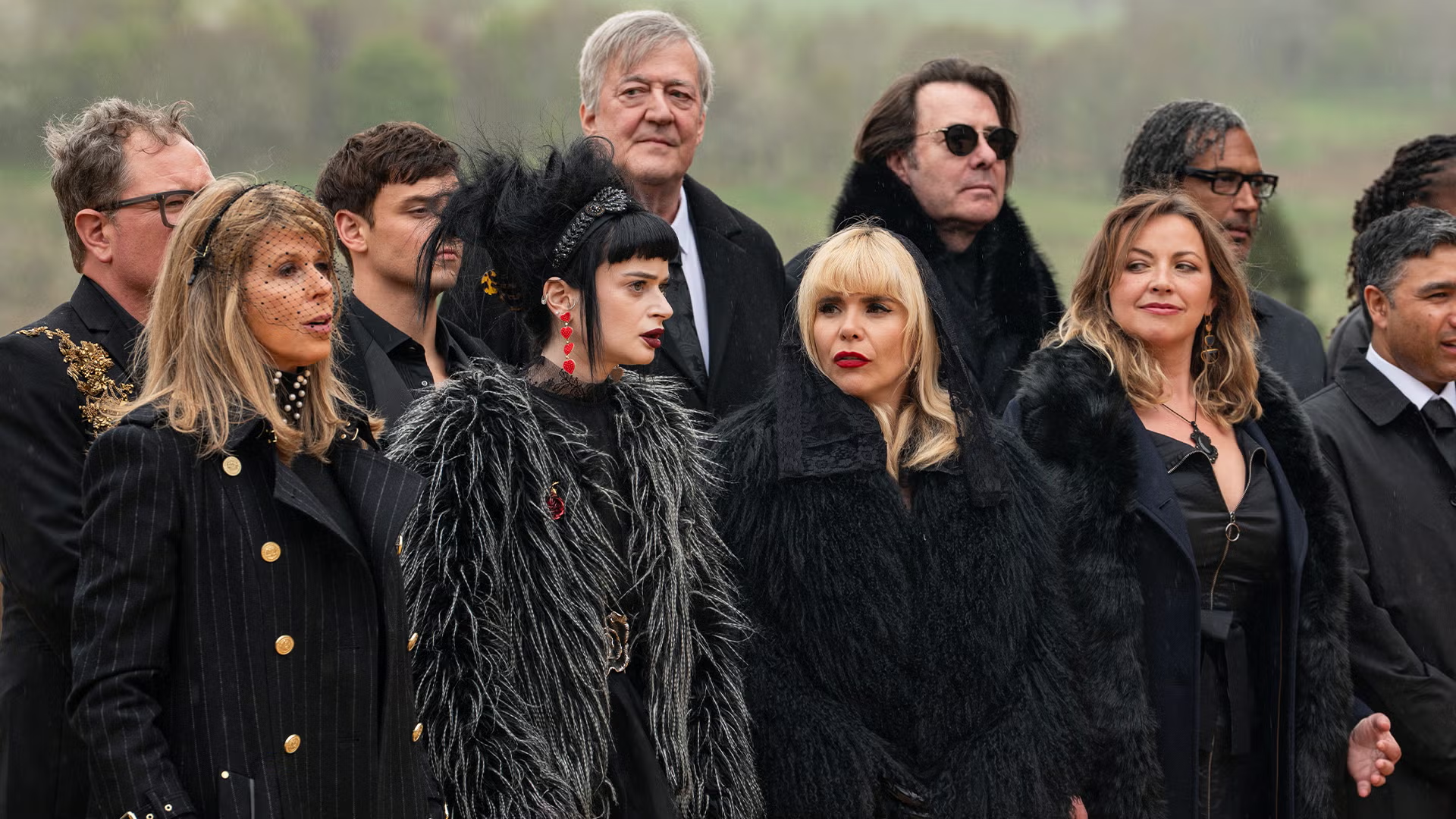
Singer Cat Burns took a similar route in being quiet, which led her to being a successful Traitor until the very end. Being neurodivergent, Burns was able to read the room and mirror others’ reactions, making her fly under the radar.
In one standout moment, she dismissed Fry’s theory of the Traitors being the ones to not get enough sleep, which contributed to his banishment. Similar to the civilian Traitors, quiet contestants who go unnoticed get eliminated due to the Faithful’s growing desperation and suspicion during the game.
Another unique aspect of The Celebrity Traitors was how often contestants were judged, subconsciously, by their standing. Historian David Olusaga, despite being mostly inaccurate, already had respect because he was a successful academic. Olusaga, similarly to Fry, often overanalysed situations, with his use of complex wording making it seem as though his theories carried weight. This often misdirected the conversations the Faithfuls were having. Marler, in contrast, voiced frustration at not being taken seriously early on, admitting he ‘sounded less clever’ than others, even when his theories ended up being the most accurate.
This revealed an unspoken bias within the game, which we can see in our wider society too, with those who spoke abstractly and confidently being the most listened to. As he was used to confrontation and gauging people from rugby, he spoke directly, a contrast to the cordiality of the other celebrities who were conscious of how they would be perceived on television. His brutal honesty made him appear volatile, with the Traitors using this to their advantage by the finale, arguing that his passion could be a mask for a keen Traitor. In turn, Mohamed, the ally Marler trusted most, abandoned him for the more socially fluent Alan Carr.
Marler’s downfall showed how your standing and communication strategies shaped trust, with Carr’s victory proving that the same rules could be used to win. Whilst some blamed the Faithful’s weak gameplay, Carr’s triumph resulted from the exercise of his public persona. As a chat-show host who never takes himself too seriously, Carr knew how to manage a room.
Even when he slipped up, such as forgetting he had a shield or laughing mid-confession, his self-deprecating humour made the moments seem endearing. By playing this role, he subtly steered the conversation and eased tension during the roundtable. This led to Carr being immediately dismissed at the possibility of his being a Traitor, as the others couldn’t seem to fathom it, despite the game being about deceit. It was satisfying for the viewers to watch Carr’s victory and watch his progression as a Traitor.
With the consolation from Olusaga and Mohamed in the final scene, it shows that The Traitors is also about unity, both amongst the contestants and the millions brought together from watching the show.
Another article you may enjoy: https://thebadgeronline.com/2025/11/shock-over-substance-has-tv-gotten-too-unnecessarily-explicit/
