

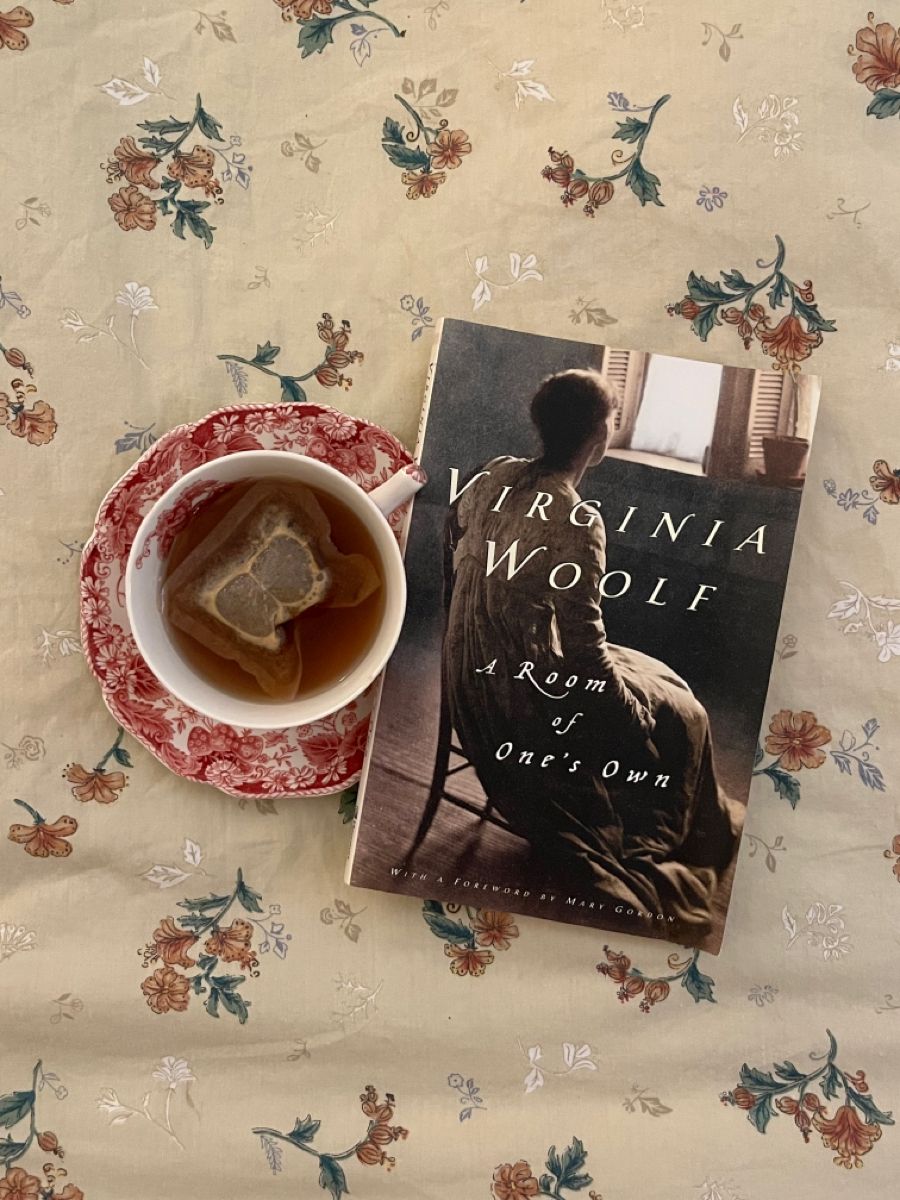
I was born on the same day Virginia Woolf was born.
25 January.
For many years, this felt like a literary coincidence, a slightly unsettling detail I would mention in passing, maybe with a smile, while studying Mrs Dalloway or A Room of One’s Own. But this year, the coincidence stopped being symbolic. It followed me across borders.
I came to England.
I now live less than an hour by train from where Virginia Woolf lived and wrote: Monk’s House, in the village of Rodmell, East Sussex.
I walk on the same ground where she wrote, suffered, and ultimately could not remain alive.
And on this same land, I fell into depression.
There is something unsettling about geography when it remembers more than we do. I was not searching for Virginia Woolf, yet she appeared anyway: in train windows, in quiet streets, and in the weight that settled into my body without permission. I was not trying to mirror her life; I was simply living my own. Still, the similarities pressed on me insistently.
Virginia Woolf lived with severe mental health struggles. What we now call bipolar disorder and chronic depression shaped both her life and her writing. She lived in a time that romanticised women’s suffering but offered them no real care, no medication, no language capable of holding pain without fear or stigma. In 1941, she filled her pockets with stones and walked into the River Ouse.
I did not walk to a river.
Instead, I walked into a clinic
I named what I was feeling.
I was prescribed Prozac/Fluoxetine.
And slowly, imperfectly, unevenly, I lived.
This is not a story about strength.
It is a story about timing.
We like to believe that survival is a moral achievement, that those who live are stronger, braver, and more resilient than those who do not. But standing where Virginia Woolf once stood, I understood an uncomfortable truth: I am not stronger than she was.
I was simply born later and luckier.
What saved me was not discipline, talent, or willpower. What saved me was access: to diagnosis, to treatment, to a world that, despite all its flaws, recognises mental illness as a treatable condition, not a shameful one. The distance between Woolf’s death and my survival is not personal. It is historical.
And that matters, especially in how we talk about women’s creativity.
There is a long and dangerous tradition of tying women’s genius to their suffering. We admire the tortured artist. We quote her despair. We aestheticise her breakdowns. Virginia Woolf is often trapped in this narrative, her suicide framed as a tragic but inevitable end to a sensitivity too refined for this world.
But what if this story is wrong?
What if Virginia Woolf did not need to die in order to write what she wrote?
What if her mental illness was not the source of her genius, but the force that cut it short?
When I began taking antidepressants, one of my deepest fears was that I would lose my voice, that medication would flatten me, dull my thoughts, silence the sharp edges that make me who I am. This fear is common among writers, especially women, because we are taught -implicitly and explicitly- that pain is productive.
It was not true.
Treatment did not erase my ideas. It gave them air.
In A Room of One’s Own, Woolf argues that women need money and space in order to write. Today, I would add one more thing to her list: mental healthcare.
A room is not enough if the mind is at war with itself.
Independence is not freedom if survival is not guaranteed.
As a woman who studied English literature, I was trained to analyse Woolf’s sentences, not to question her silences, to admire her work without interrogating the conditions that made her suffering seem inevitable. Coming to England forced me to confront this gap not as a scholar, but as a body.
I lived where she collapsed.
And I lived because the world has changed, slightly.
This is not a celebration of modernity. Mental healthcare remains unequal, politicised, gendered, and inaccessible to many. But its very existence made the difference between life and death, and that difference deserves to be named.
I am now working on a podcast inspired by A Room of One’s Own. I call it A Room Not Only for Women. It is my way of continuing a conversation Woolf began but could not finish—about who is allowed to speak, who is allowed to rest, and who is allowed to survive their sensitivity.
I do not feel that Virginia Woolf is haunting me. I feel that she is accompanying me.
Her questions remain urgent, but her death should not be glorified as part of the price of genius. Feminism cannot afford martyrs we simply refused to save. Creativity does not require collapse. Survival is not a betrayal of art.
I often wonder, quietly and without certainty, whether Woolf would have written more had she lived in a time when treatment was more possible. Not better—just more. More essays. More anger. More joy. More ordinary days that did not end in water.
We will never know.
But I know this:
I do not write because I survived.
I survived in order to write.
And that, too, is a legacy worth protecting.
If you enjoyed this piece, you may also like – In Defence of Banned Books
