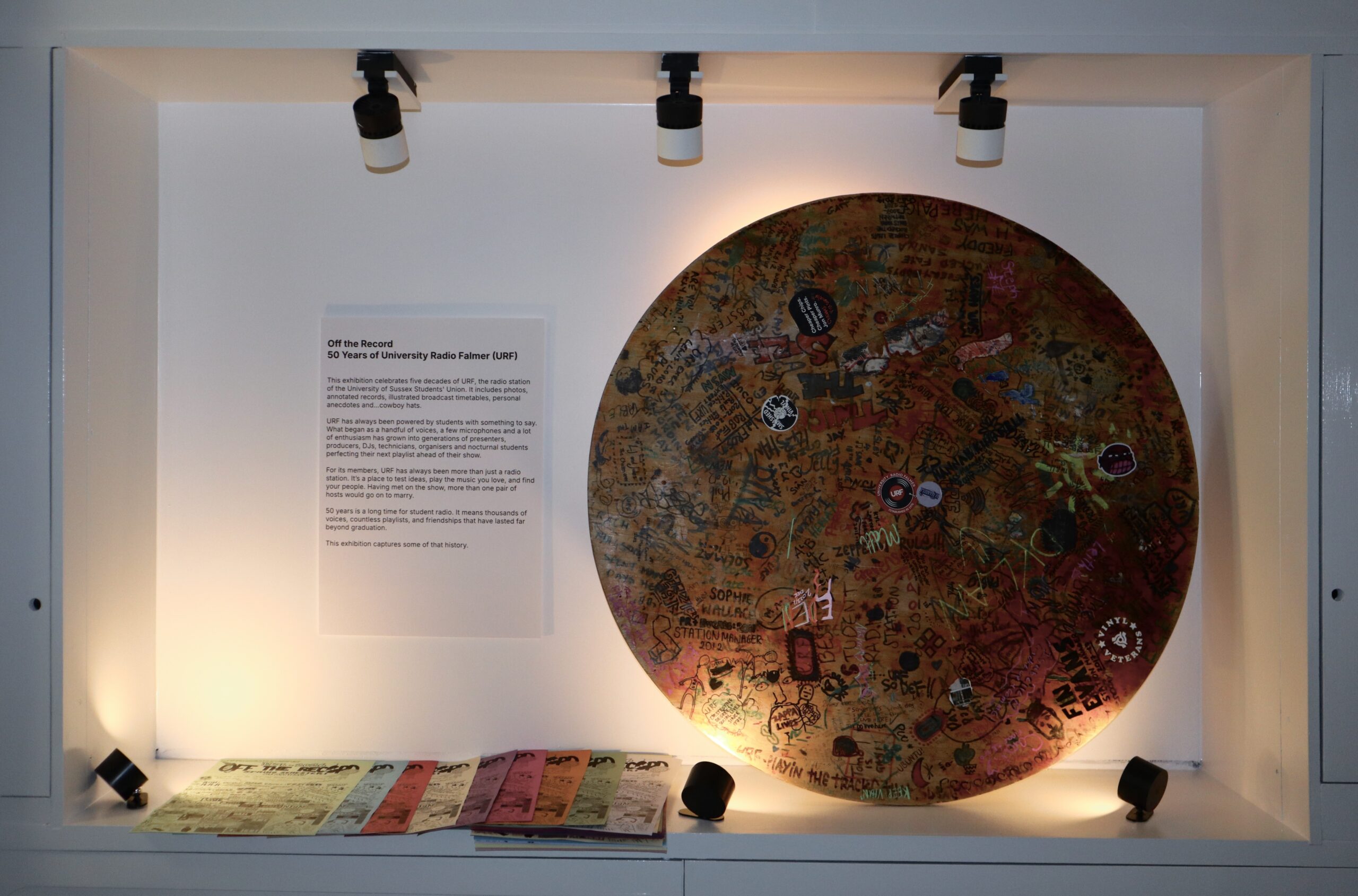
It has been 50 years since University Radio Falmer (URF) was founded. To celebrate, URF is doing various events, including a celebratory gig at the Attenborough Centre for Creative Arts on 23 May. Currently, Off The Record, an exhibition exploring the station’s history, is on at the University Library. Throughout its years on air, URF has had many well-known guests featured on it, including Siouxsie Sioux, The Clash, and Fatboy Slim. It faced the trouble of the pirate station Radio Caroline taking over the frequency, and in 1997, the station won the Student Radio Awards, where the prize was taking over BBC One for an hour. You can find out more about URF’s fascinating history at the exhibition, which is open every Monday to Friday, 1-4 pm.
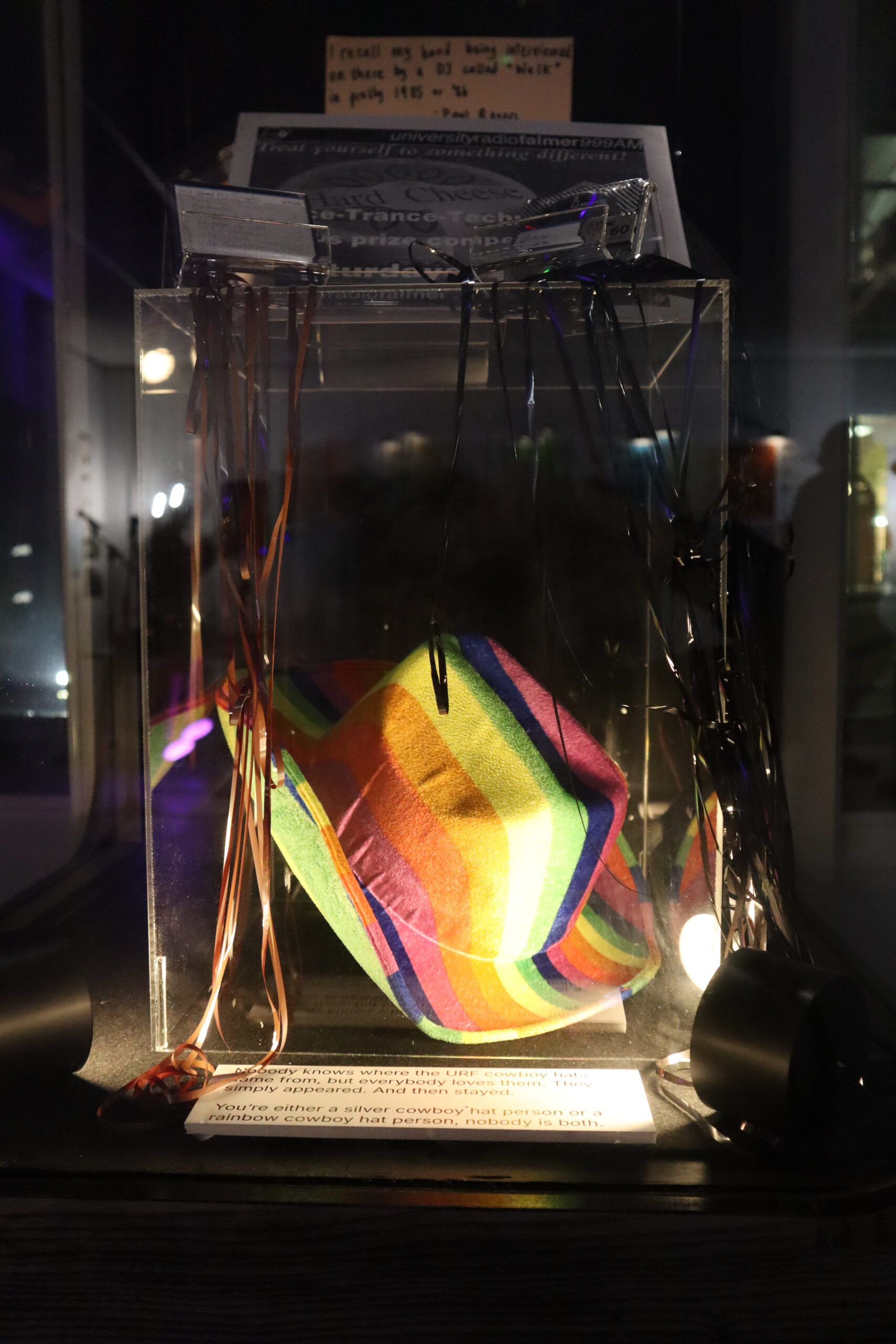
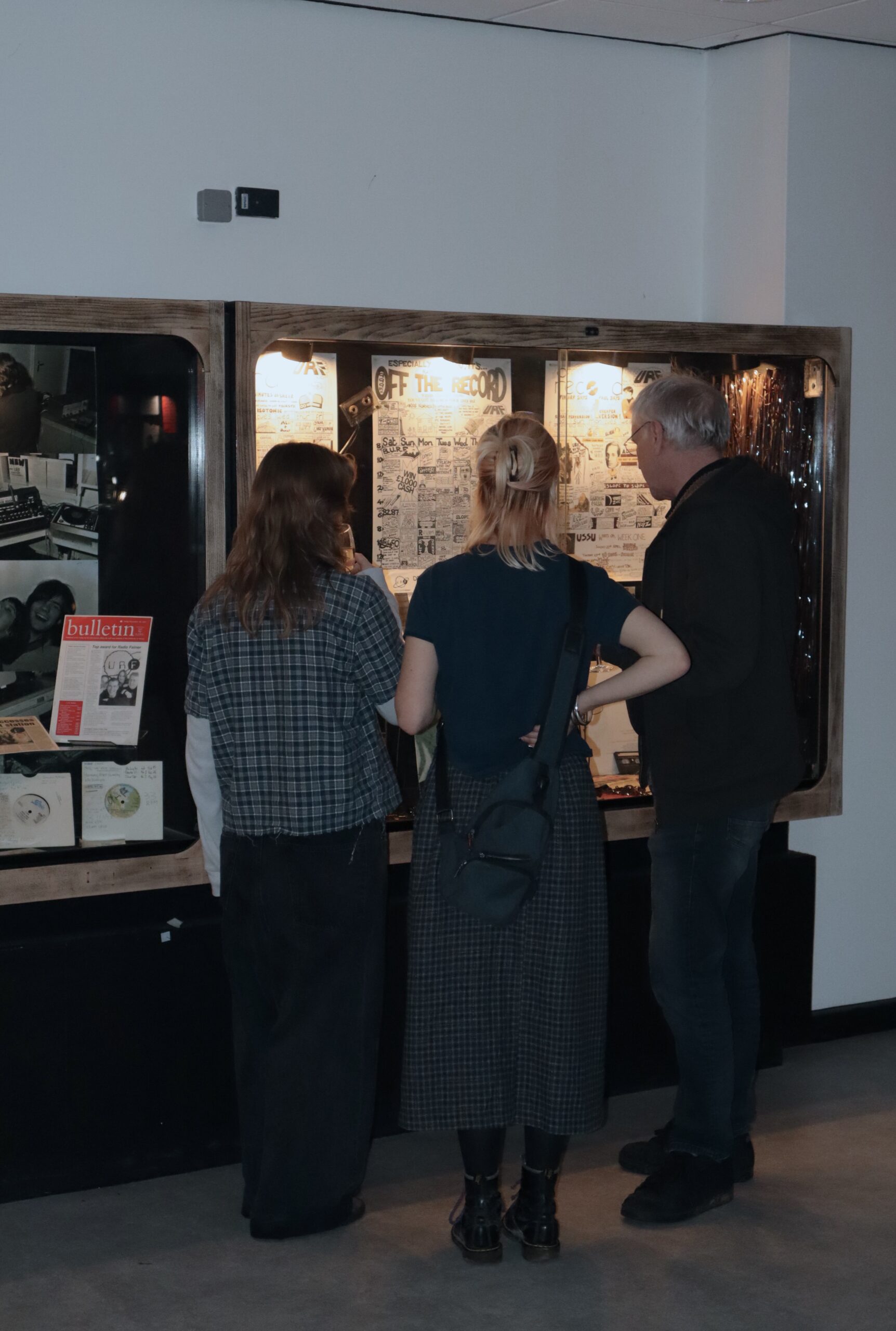
The Badger was lucky enough to be invited to the exhibit’s private viewing event on its opening night. Despite being a fairly quiet and understated event, there was a buzz of excitement from visitors. With a complimentary champagne in hand, guests perused the exhibition, reading the displayed testimonies from past members intently and enjoying the items on display. These include a heavily graffiti-covered tabletop, lots of old records and even URF’s iconic studio cowboy hats. The gallery that URF has created looks incredibly professional, a testament to the current committee’s hard work and their dedication to honour the society’s history. There was also a beautiful communal feeling, with people, young and old, coming together to share stories of their time on air. During the event, we spoke to several student radio hosts, who were deeply passionate about their connection to the station, as well as getting the chance to speak to past members, some of whom had been there during URF’s inception.
We were particularly excited to speak with Lindsay Thomas, who founded URF in 1976. He was secretary of the Students’ Union and ran on three pledges: to set up a radio station, create a scholarship principally for black students from South Africa, and build a swimming pool on campus (which was very popular at the time, but never came to fruition). Thomas stated. “Part of my manifesto was to set up a radio station, this was because there were seven or eight radio stations in other universities… One of my aims was to rebroadcast 9:00 / 10:00 [am] lectures at 11 o’clock… In those days, it was completely useless if you didn’t get up by 9:00 / 10:00; let’s face it, who could? You missed the whole bloody lecture, so I did win that election, and I said, “Right, this is one of the manifesto pledges, let’s go and do it.” [Student radio stations] had all been started by techies in the other universities, so when I first met up with them to get feedback and ideas and get informed frankly about how to do it, they all went, “You’re from the Students’ Union? We never have anything to do with the Students’ Union. That’s absolutely ridiculous.” One of the impacts of that was that those radio stations had to be commercial; they had to sell advertising to operate, whereas URF was funded by the Union.”
Thomas went on to explain his memories of setting up URF. “What I had to do to prepare for it was not only get the license and all sorts of things like that. But the technology was an induction loop, which meant that we had to have a cable which ran all around the University. The limit on the license was the power outside the boundaries of the University, even though the field beyond there was sheep; it had to be so low that it could not be picked up by their radios. Every so often, we got a break in the loop, and they would pick it (the signal) up in Peacehaven and wonder what it was. That’s just the nature of the Downs and shortwave; I had to dig this thing, only about nine inches deep. The effect of that, of course, was that every time they did any major piece of work, they cut it, which led to this thing going to Peacehaven. The studios were in Norwich House. So, we got the University to agree to those sorts of things. But in those days, the Students’ Union had quite a lot of money and was a funder of things.”
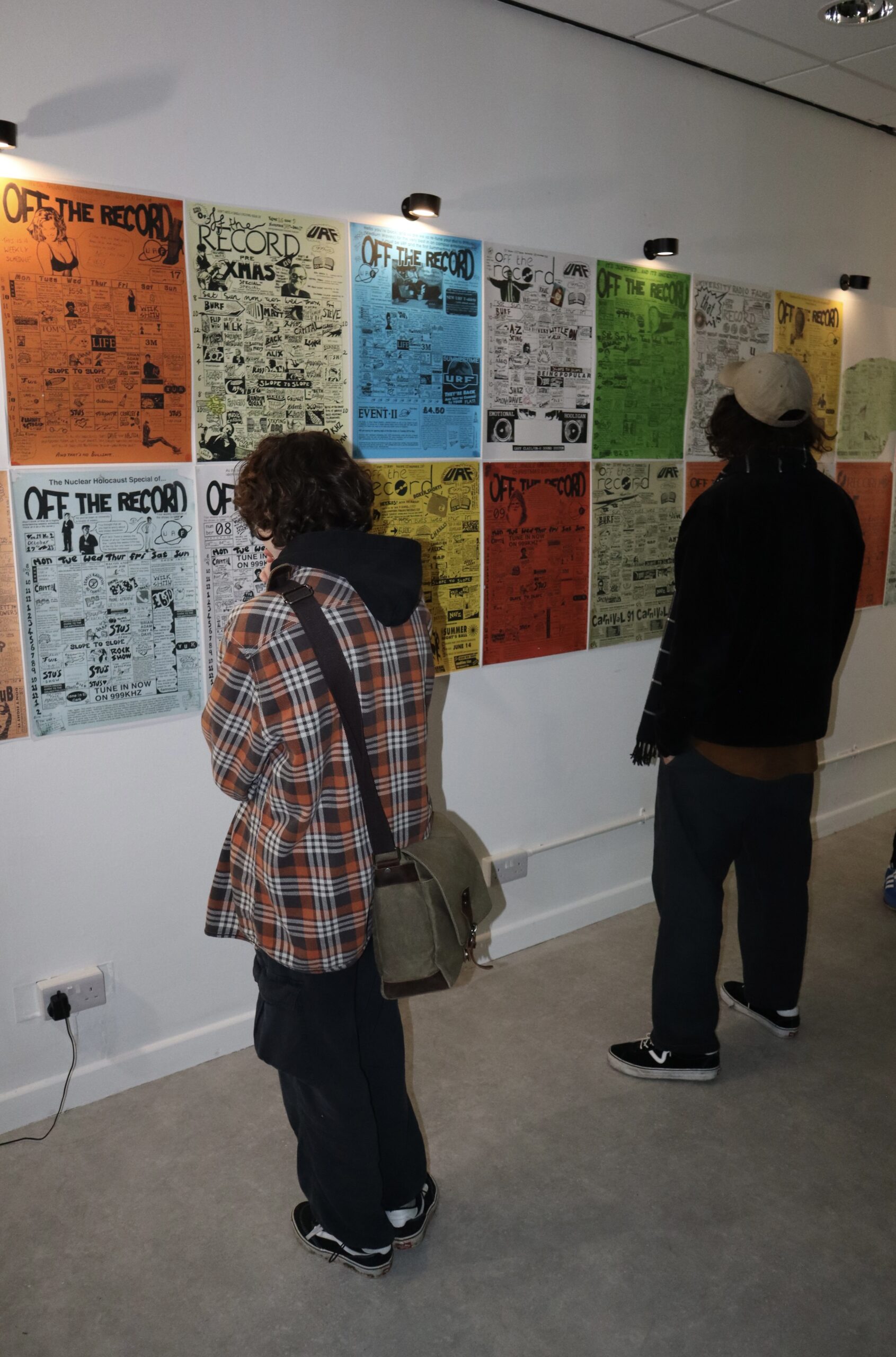
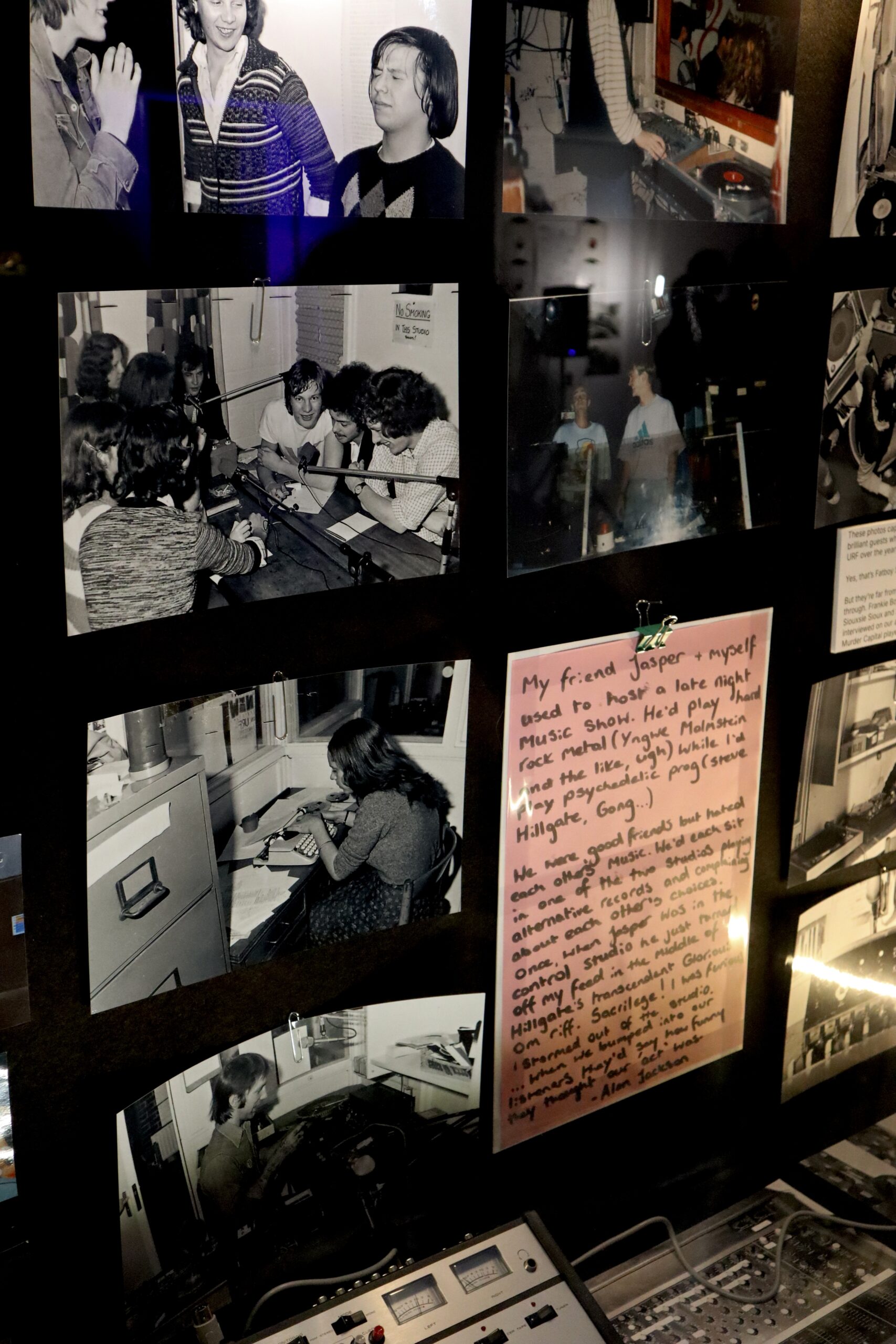
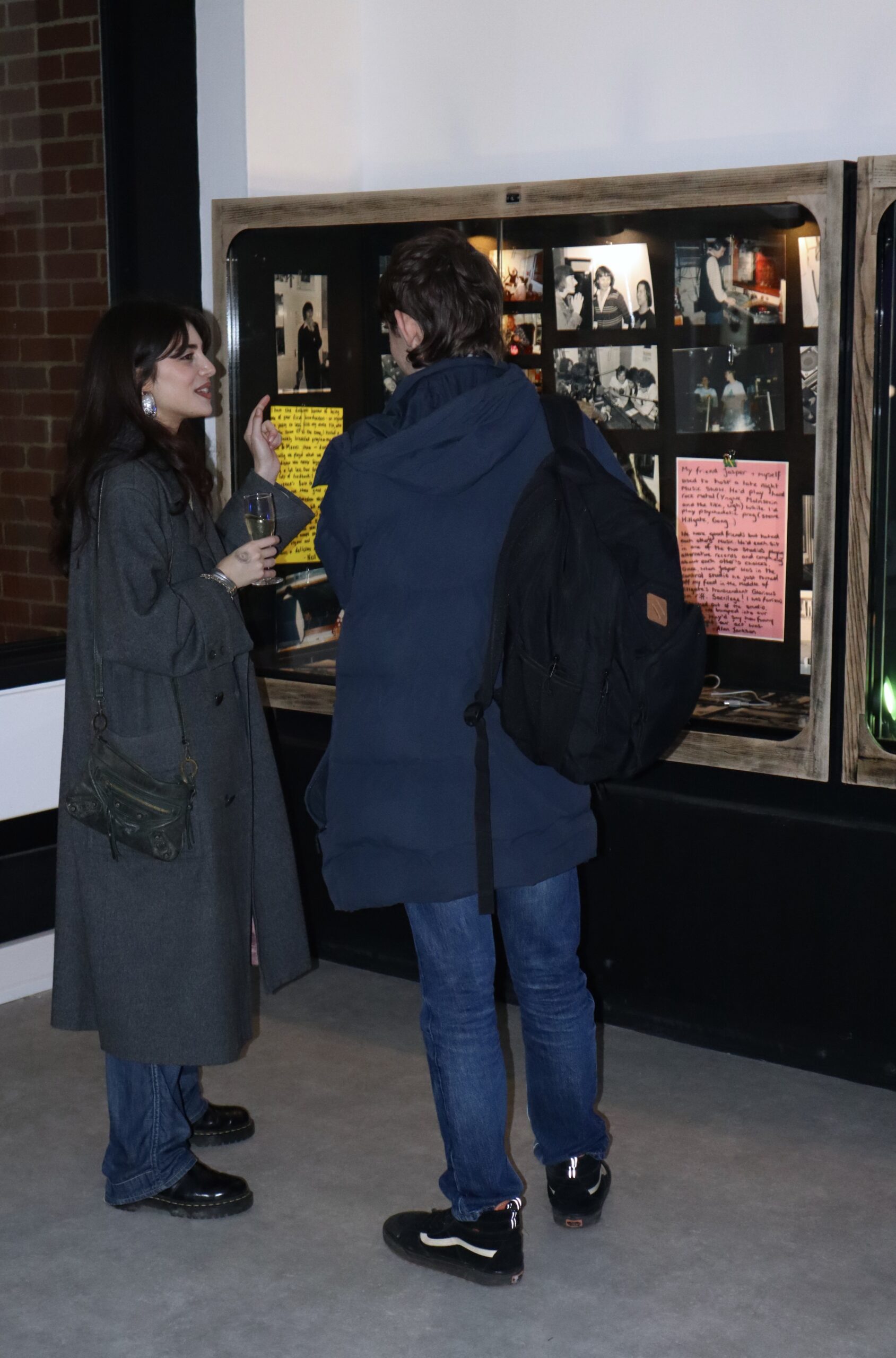
On seeing the exhibition on the history of URF and knowing it lasted 50 years, Thomas said. “It was very nice, and I just think it’s been useful, it’s been useful for people who did it, I think it’s been quite useful for the people who listen to it, but it was part of life. We were really keen to create a life at the University. Beyond the academic thing, which was very important, but beyond that, a life.”
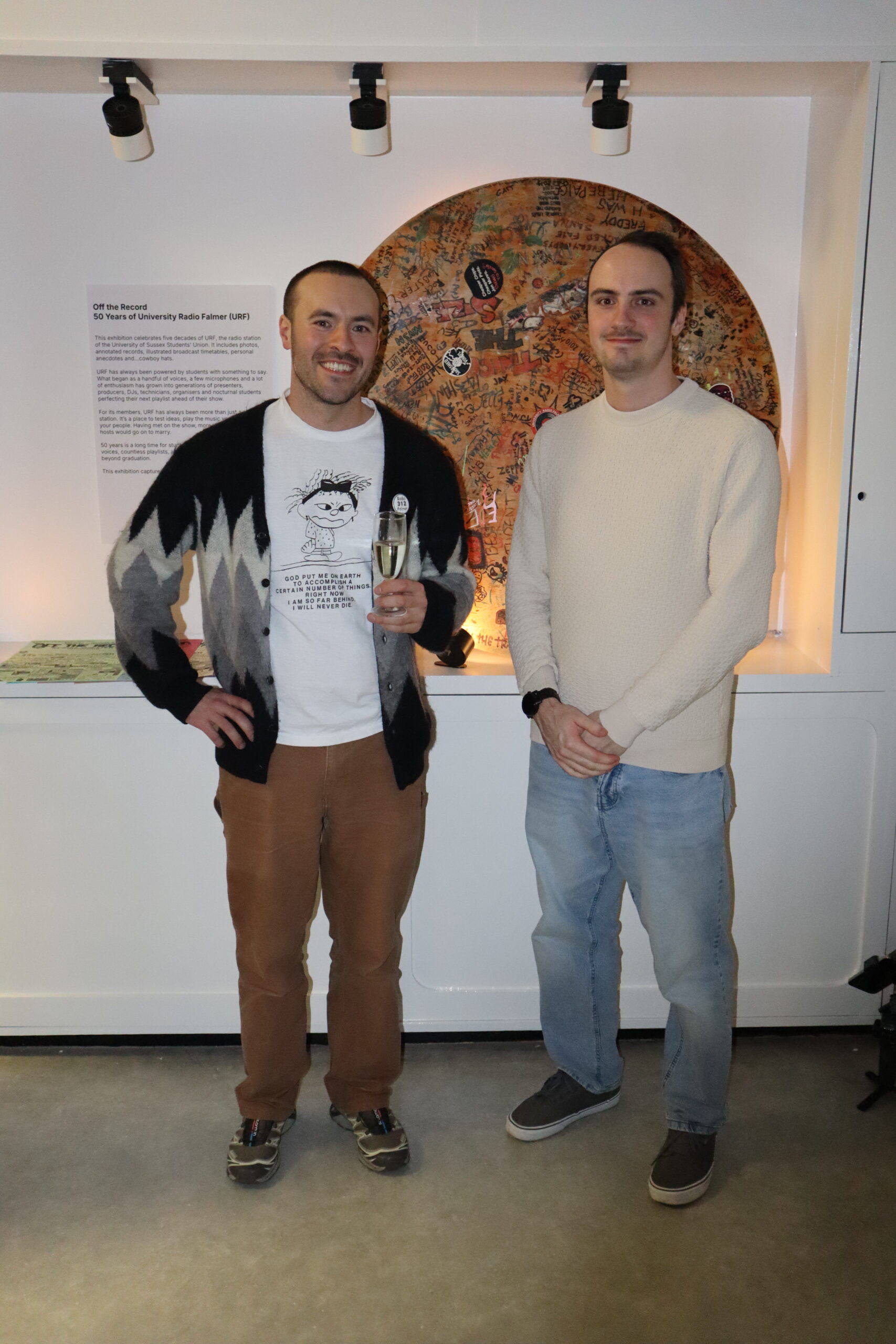
Jack Speat, the current Station Manager, commented. “When putting together the exhibition, the focus was always on the people who made URF. Their fond memories and stories were the most important things to be archived from my perspective. For me, knowing that for 50 years there’s been an enthusiastic group of students pouring more time into the station than their studies makes the struggle of running a radio station well worth it (although now it’s time to focus on studying).”
URF’s Off The Record exhibition will be open to the public on weekdays, 13:00 – 16:00, in the Sussex University library until March 20th.
Photography by Fi Muncaster