

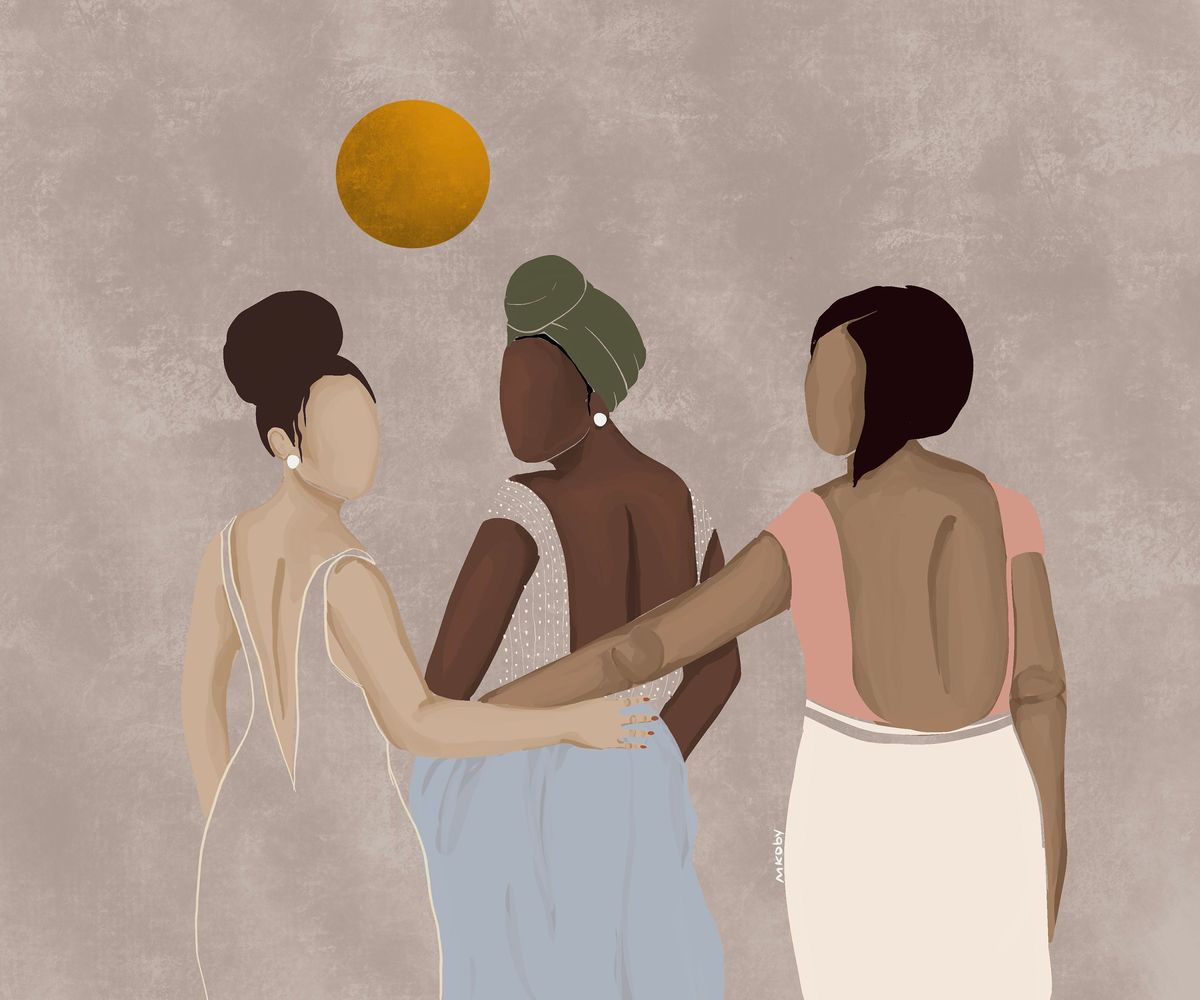
How our backgrounds shape the way we see gender in media
We were not just students in a master’s program, but three stories that came from distant maps and met in one room at the University of Sussex. At our very first meeting, there were only six students: three British and the three of us from “another world.” From the very beginning, it was clear that we didn’t just carry cultural differences, but entire lived experiences—heavy with questions about gender, freedom, voice, and meaning.
Rita came from North Macedonia, a TV presenter from the Albanian minority there. She chose to speak about gender issues in a context that does not easily tolerate such conversations. She told us about the threats she receives, the hate speech, and the constant feeling that her voice is being watched and targeted. Yet she did not stop, because for her, silence was a greater loss than fear.
Zoya came from Delhi, from a complex family story: a Muslim father and a Hindu mother, a marriage that did not last, and an identity shaped by sharp contradictions. This pushed her to search for herself early on, and to choose journalism, not only as a career, but as a way to understand the world and reshape it, especially when it comes to women’s issues.
As for me, Wafaa, I came from Upper Egypt, from an environment that does not easily accept women’s rights to education, travel, or independence. Being in that classroom was not just an academic step—it was an act of resistance, a challenge to an entire social path, and an attempt to open a window for other women who may not yet see this road as possible.
In the first days, we didn’t know we would become “us.” But something began to take shape in the long hours after lectures, in the conversations that stretched endlessly as we shared: our small victories that no one sees, our quiet defeats, the paths that brought us here despite everything that could have stopped us. Again and again, we realised that women’s struggles are not confined to one geography. They take different forms, yes, but share the same core: control, expectations, fear, and attempts at restriction.
In England, we were living a new experience—relative freedom, space to experiment—but also a deep sense of alienation, of carrying entire worlds inside us that others could not see.
Amid all this, we began to see ourselves more clearly—not only as individuals, but as part of a larger narrative. We were visibly different: Rita, with her European features and free style; Zoya, an Indian journalist from a middle-class background with sharp awareness; and I, a veiled woman from the South, carrying a complex personal and cultural history. But this difference was not a barrier—it was an entry point to deeper understanding, a space for unexpected intersections.
We did not always agree, and our experiences were not identical, but we listened. And that was enough to create something rare: trust.
We were learning from the curriculum, yes—but we were learning more from each other: how to endure, how to retell our stories, how to turn personal experience into knowledge, and how to turn knowledge into action. We found ourselves rethinking feminism itself: individual freedom, or collective struggle? Does it begin with the body, the law, or the voice? We did not have one answer—and perhaps that was the point. To allow multiple answers to exist, and to see how feminism takes different shapes depending on place and background, without losing its shared essence.
Over time, it became clear that what connected us was not only our studies, but a shared sense of responsibility—toward ourselves and toward other women. We often spoke about “returning”: what would happen when we go back to our countries? Will we be able to work freely? Will we face the same restrictions again? And will we still be the same people after this experience? These questions were not theoretical—they were heavy and real, carrying both fear and urgency, as well as a strong desire to act, to ensure that this experience is not just a passing phase.
Now, as we are in the middle of this journey, there are still more questions than answers. We don’t know where each of us will be in a year, or five years, or what our paths will look like when we part ways. But what we do know, clearly, is that this experience has changed us. We are no longer the same women who walked into that classroom for the first time. We are more aware, more courageous—and perhaps more anxious too. But even that anxiety is part of the story.
Three women, one degree, and an experience that opened doors we didn’t even know existed. And maybe, at the end of all this, there is a small idea we carry with us—still not fully formed, but quietly persistent: that the stories we began here should not end here. And maybe one day, these stories will find their way into a space we create ourselves.
Another article you may enjoy – https://thebadgeronline.com/2026/03/six-days-no-water-how-my-landlord-traded-my-basic-rights-to-explore-disneyland/
