

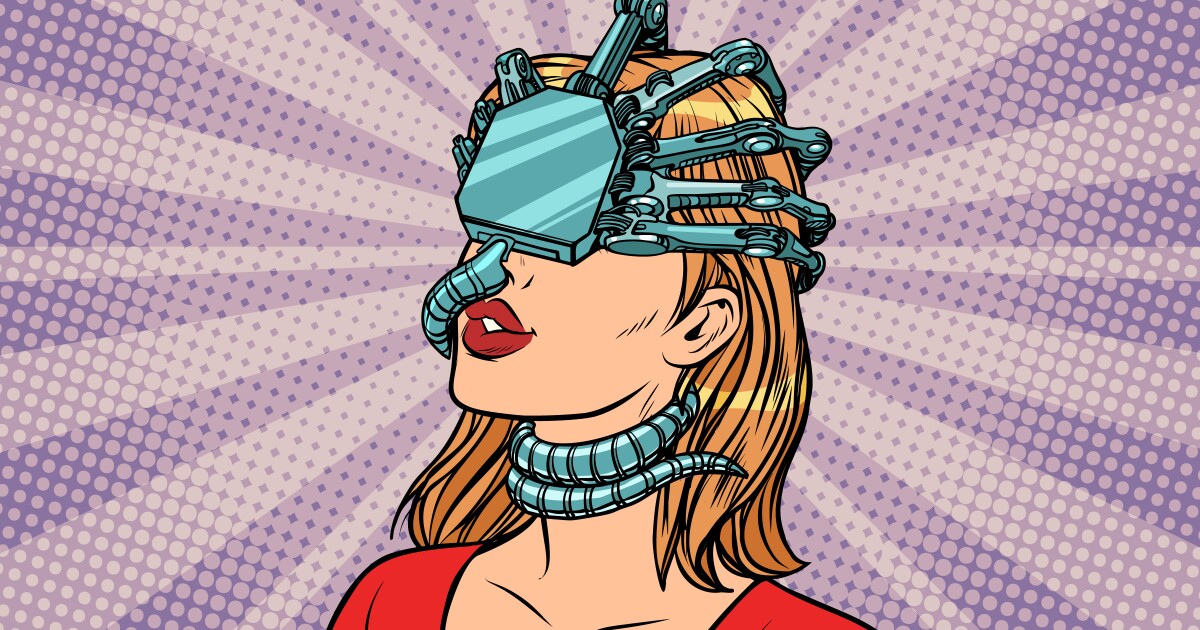
Generative AI: Personal Genie?
AI can feel like magic. In seconds, a single prompt yields an abundance of critical, almost poetic feedback. If you need health advice? Chat. Therapy? Chat. An essay due in 5 hours, and you need help? Chat. AI is your own personal (and often sycophantic) assistant. Essentially, a yes-man. Although I do chuckle at an AI apple morphing into a man video on Reels, it is easy to forget its damage. Of the many detrimental effects of AI, namely: AI-generated pornographic deepfakes, the theft of artists’ and writers’ work, Sora-AI and misinformation, Large Language Models (LLMs) like Musk’s ‘Grok’ trained on propaganda, and AI’s disastrous environmental impacts. This article will concentrate on AI’s disintegration of what is core to humanity: our minds.
Chat, Are We Cooked? Brain-Rot Accelerated:
Several neurological studies have found that short-form content and ‘doomscrolling’ have caused lower attention spans, brain fog, and poor memory recall – and it cannot just be me who is beginning to find these effects within myself. Short-form content prizes instant gratification over deep focus, making it harder to enjoy slower activities. Research has confirmed that Gen-Alpha, otherwise known as the “iPad kids,” have an all-time low literacy rate.
Frequent AI users are “forgetting” how to write essays, and reading for pleasure has dropped from 35% to 14%. On top of this existing media literacy decline, AI is accelerating the damage. MIT conducted a study where three groups wrote an essay: one using only their brains, one using search engines, and one using AI. They found that the AI group had significantly lower brain activity and poorer information recall, struggling even to remember the contents of their essay.
Some argue that you must be intentional with AI, asking it to help you understand something rather than having it complete it for you. However, since the dawn of time, young people have rolled their eyes at health consequences: smoking, drinking, vaping. Most will use AI to avoid learning, and what happens when children haven’t learned critical thinking? Using AI eases mental exertion, and simple tasks (like writing emails) become strenuous, and slowly, ChatGPT becomes a substitute for your brain. One student on X (formerly Twitter), “College is just about how well I can use ChatGPT.” Such cognitive offloading is beginning to mirror a Wall-E dystopia.
Reflecting Mass Disillusionment:
Are our education and work systems flawed? Celia Ford discusses how jobs often require more from the brain than biologically possible; thus, AI lessens this workload. The same is said for overworked students. AI is also used for therapy and health issues – but what does this say about our underfunded NHS system and overworked staff? Overworked employees in general? Many professors and students alike wish education were solely for enjoyment.
But it is no revelation that the real-world rewards are collecting qualifications: GCSEs, A-levels, and degrees, to impress the job market. How many students do not choose a humanities or creative degree because they are told it’s useless? How many modules are getting discarded because they are seen as futile? Studying becomes a chore to meet deadlines, so no wonder students use AI. The use of AI is a by-product of mass hopelessness; absurd food, housing and gas prices, as well as the strained NHS. Most of us are numbing out and using AI to think in our stead.
Inconvenience: A Necessity:
Billions are being poured into AI, and it’s becoming inescapable. Google summaries. Snapchat AI. Gemini. Why is it fed down our throats? People are choosing between eating and heating their homes, the job market is crumbling, not to mention Global warming. It’s insulting that AI is prioritised over material needs.
In this fast-paced, results-driven world we live in, taking shortcuts is convenient, but we must keep sharp. The smartphone promised connection and has done the opposite. Instead of enhancing our abilities, AI is making us reliant and inept. Write that email, do that essay yourself, exercise your mind! There is a slow, wonderful kind of joy to being challenged.
Another article you may enjoy: https://thebadgeronline.com/2026/01/freedom-over-family-the-child-free-by-choice-movement/
