

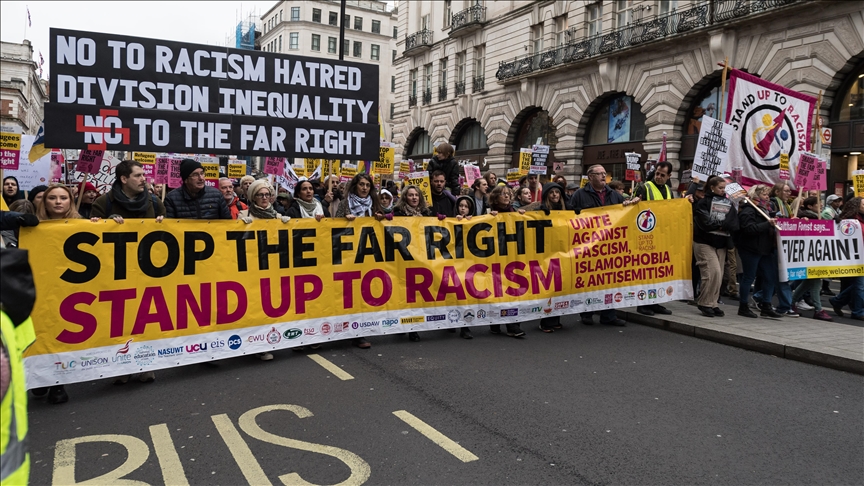
On 29 July 2024, the UK witnessed a tragic attack – a teenager named Axel Rudakubana stabbed multiple young girls at a dance class in Southport, killing three. Following this incident, mass anti-immigration demonstrations erupted across England and Northern Ireland, aggressively targeting members of ethnic minority communities, mosques and hotels housing asylum seekers.
These anti-immigration riots were fuelled by misinformation that the perpetrator of the Southport attack was a Muslim asylum seeker, compounding already growing far-right hostility towards Muslims and immigrants. Violence erupted without provocation: missiles were thrown, vehicles were torched, and attempts were made to set police officers on fire. This civil unrest became the most significant disorder in the UK since 2011, spreading to 27 towns and cities and leading to 1,280 arrests within a month.
Since then, the far-right activities have continued to grow. In September 2025, more than 100,000 people attended the UK’s largest-ever far-right protest, the “Unite the Kingdom” rally, which caused unrest across the streets of London. Hundreds of thousands of St George’s flags have been hoisted in villages, towns, and cities across the nation.
Amidst these far-right activities, it is easy to focus all our attention on the beliefs and motivations of far-right supporters and lose sight of the other side of the table – the counter-protesters. They are significantly fewer in number – thousands as opposed to hundreds of thousands of far-right protesters. Yet they stand against a frightening wave of anger, armed only with placards. Their actions may seem foolhardy, reckless or even radical to outsiders, but to those who support them, they appear necessary, meaningful, and courageous. The question must be asked: what motivates the actions of these counter-protesters? Why do they choose to act, whilst many others choose to watch the chaos and criminality unfold from their living rooms?
Curious about the psychology behind these counter-protesting activities, I conducted a research project during my master’s degree to answer these questions. I interviewed attendees of the 2024 counter-protests, many of whom were long-standing members or organisers within the group Stand Up To Racism, one of the most prominent anti-racism organisations in the UK.
As it turned out, a key factor echoed across the interviews was a desire to protect the reputation of the places people considered home. Whilst safeguarding vulnerable groups was important, the symbolic protection of spaces was paramount. This helps explain why the recent “flag protests” have also ignited such fevered debate. Spaces within communities hold deep symbolic weight; they represent the history, character, and heart of a place. Counter-protesters understood this and felt an overwhelming duty to defend it.
Another important psychological factor was the role of activism as a social identity. A social identity is a part of who we are that stems from the groups to which we belong. In certain situations, that identity becomes more or less strongly felt. Think of your identity as a family member, a student, or a cyclist: depending on the context, one will take precedence. For these counter-protesters, when the riots began, their identity as activists surged to the surface. This created a powerful need to act – a need to counter-demonstrate.
One finding was unexpected. Despite the often-documented tension between activists and police, many counter-protesters initially turned to the police and local authorities for support. Sadly, they were frequently met with hostility, leading to further fractures between local councils, police, and the communities they serve.
Given these findings, a crucial question emerges: Could identifying shared community identities and fostering communication between protesters and counter-protesters around these commonalities help defuse tensions? At the most fundamental level, both far-right protesters and counter-protesters are working to protect what they call home.
Can society promote alternative, less contentious symbols that still capture people’s desire to feel ownership of their streets? Can local authorities and police work with the public to foster a more cohesive sense of community? These questions must be answered to resolve the ongoing and widening conflicts between far-right supporters and counter-protesters, and promote greater social harmony.
