

It is not often that a book, within the first paragraph, will affirm to you that the earth will eventually (in 5 billion years) be destroyed by the sun (due to its expansion), and be left a ‘charred, lifeless, magma-covered rock’. Fortunately, 5 billion years feels pretty far in the future, far enough not to have caused me any immediate sense of dread. With this, I read on – and I’m glad I did, as the book spends the next 200 pages wonderfully outlining something far grander than the end of the earth: the end of everything.
I found my copy of the book in a charity shop in the middle of Cornwall while visiting family, which, for those who know Cornwall, means I did not really know what to expect. I had no real sense of what the book was about, other than the fact that it was something to do with astrophysics and ‘the end of everything’. It turned out the book, published in 2020, was a guided tour of the most likely ways cosmologists currently expect the universe to come to an end.
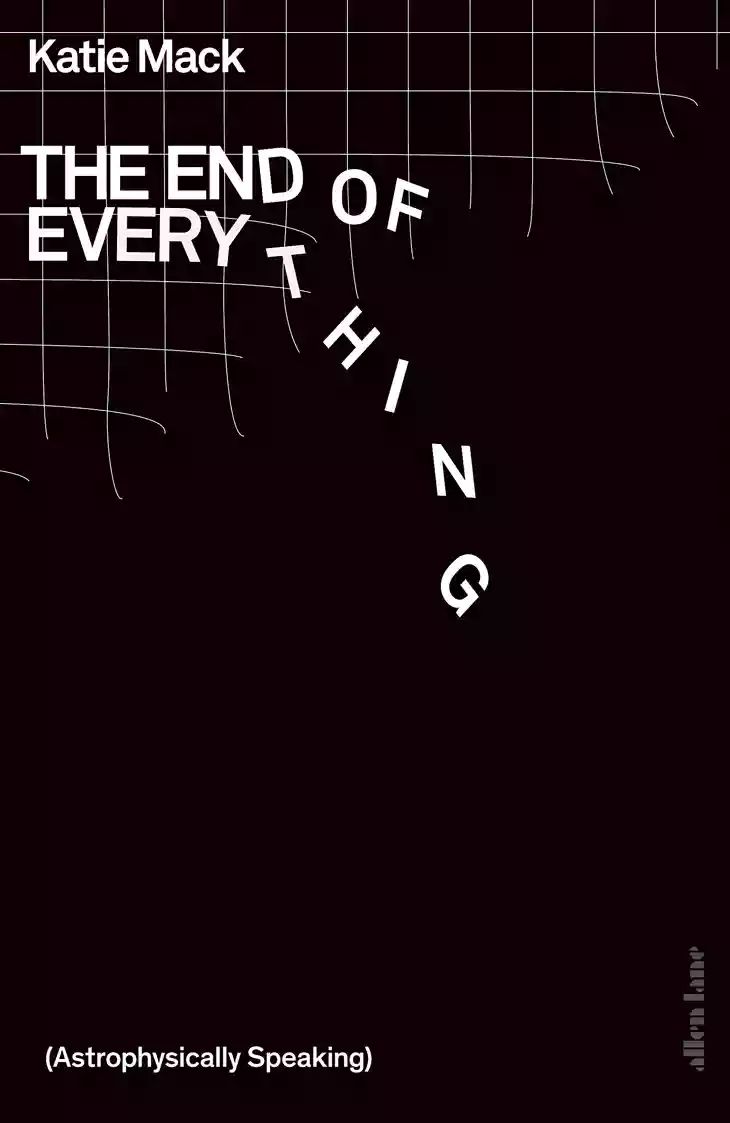
This was, in fact, the first thing I learnt and took away from this book: that the universe as we know it is expected, almost certainly, to eventually end. Once again, it comes as consolation that in (nearly) every scenario the author details, the end of the universe is unthinkably far in the future, enough so that it still makes more sense to concern ourselves with more pressing, current issues that are closer to home.
Still, even if very far away, the subject may not seem particularly joyous. However, The End of Everything was one of my most enjoyable and light-hearted reads in the last year. In fact, I came out with a sense of wonder and peace. This is thanks to the author’s brilliant humour and ability not to take the writing, the subject, or the broader scientific community too seriously. Throughout the book, you will find witty anecdotes, intriguing analogies, and niche references to sci-fi shows – all of which move things along with an irreverent tone.
I must admit, as a reader with little knowledge of astrophysics, I was at a couple of points a little lost. I expect this was due, on one hand, to my own shortcomings, and on the other hand, some of the natural limitations in explaining high-level scientific concepts and theories in relatively few pages. This said, the book is for a popular audience, and my confusion at a few points did not detract considerably from my enjoyment of the book. In fact, the way the book is paced and structured means that you do not particularly need to understand what is going on throughout, as the author never dwells.
For those curious about the ‘end of universe’ scenarios the book covers, I will list some of the main chapter titles: ‘Heat Death’, ‘Big Crunch’, and the ominous ‘Vacuum Decay’. My favourite was the ‘Big Crunch’. Having a favourite ‘end of universe’ scenario is a little strange; however, by the time you have read the book, you will also have a favourite ‘end of universe’ scenario.
Perhaps a book that draws attention to the vastness of the universe and the relative tininess of our own lives will not be for everyone. For me, however, this was one of the main appeals of the book, and made it one of my favourite reads of the last year. So, for those looking either for an entertaining non-fiction book, a book on space, or more uniquely a book that will leave you with a favourite ‘end of universe’ scenario, I would invite you to give The End of Everything a read.
Another article you may enjoy: https://thebadgeronline.com/2026/02/making-change-what-is-an-artists-financial-responsibility/
