


Graffiti targeting the Sussex University Students for Reform Society has appeared repeatedly across the University of Sussex campus, amid escalating tensions following the group’s recent recognition by the Students’ Union.
Messages including “reform r nazis” and “fuck reform” were discovered spray-painted on walls around Falmer House and Jubilee on the morning of 2 February. The slogans reference ongoing opposition to the Reform Society, which was formally recognised by the Students’ Union on 15 January. Since its approval, the society has faced sustained criticism from students who argue its political links are incompatible with Sussex’s reputation for inclusivity.
The incidents mark a shift from organised protest to acts of vandalism. In the days prior, students gathered outside Library Square and the Sussex Sports Centre, holding placards and chanting slogans opposing the society’s presence on campus. Demonstrators raised concerns about Reform UK’s positions on immigration and social policy, arguing that the society’s affiliation with the party risks creating an unwelcoming environment for some students. Protest organisers previously told The Badger their actions were motivated by a desire to protect marginalised groups on campus.
Further incidents have since been reported, with graffiti appearing in quick succession across the campus. At approximately 11 pm on 9 February, the University of Sussex sign was sprayed with the word “racists.” Cleaning staff removed the graffiti shortly after it appeared. Less than 24 hours later, at around 12 pm on 10 February, additional graffiti was found outside Falmer House.
All reported incidents used the same graffiti tag, suggesting they are connected and may have been carried out by the same group or individuals.
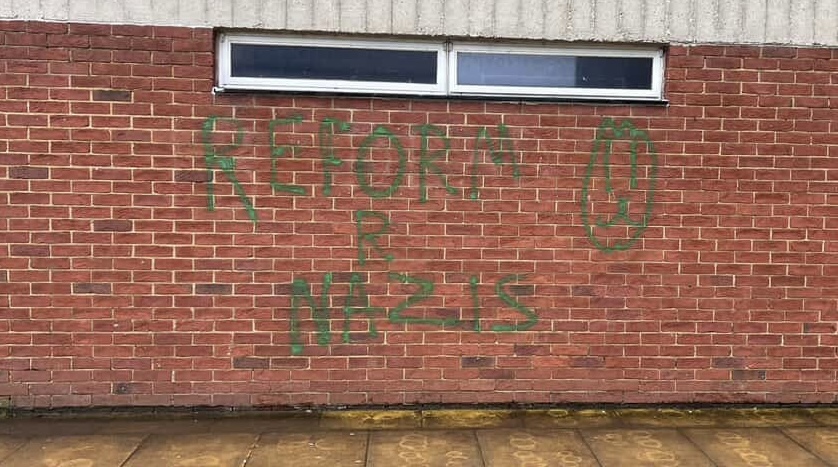

One student involved in the protests told The Badger that the graffiti reflects a determination among some students to continue opposing the society’s presence on campus. “The graffiti shows we’re not backing down,” they said. “People feel like formal protests and petitions haven’t been taken seriously, so this is a way of showing that the anger and opposition hasn’t gone away. For a lot of students, this isn’t just about a society existing – it’s about feeling safe and represented on campus.”
In an earlier statement, Jack Eccles, President of Students for Reform, said: “Universities are meant to be forums where students are free to discuss and debate a range of ideas. Indeed, it is very worrying that members of an affiliated student society are having to deal with such foul abuse, simply because of their political beliefs.”
National media outlets have also reported that members of the society have received hostile messages since its formation.
The University of Sussex Students’ Union was contacted for a response regarding the graffiti and the ongoing backlash but did not provide a comment by the time of publication.
The incidents have intensified questions facing the University and Students’ Union over how political societies are regulated, and where the line should be drawn between free expression, inclusion, and campus safety.