

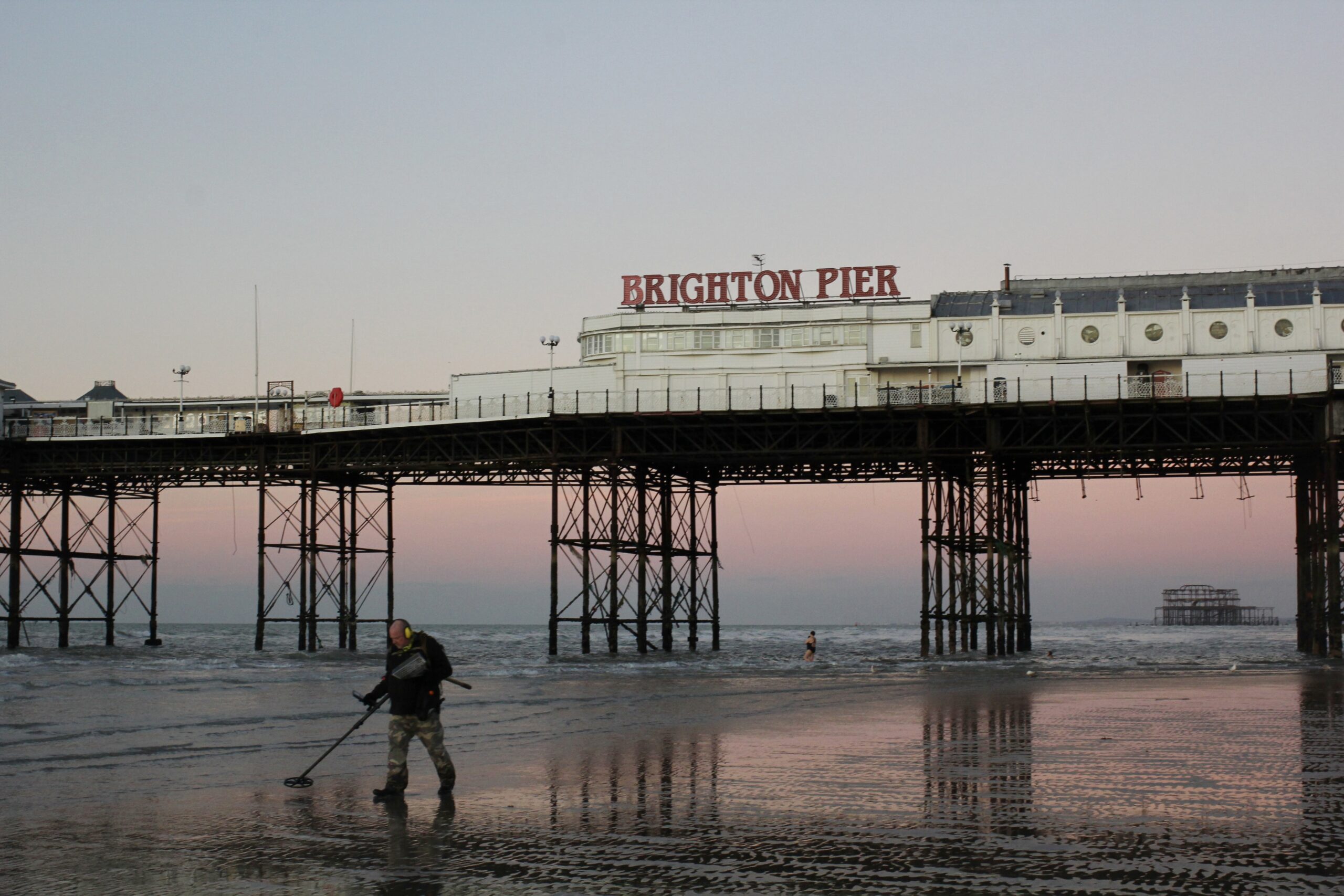
When being introduced to Brighton, or any other seaside city/town along the coast, it is common to see a pier standing on the shoreline. Brighton, of course, is no exception. The Palace Pier you see today, the feature of many a Brighton postcard, is not the first of its kind here. With 2 predecessors, one being of course the now burnt down West Pier and the lesser known Chain Pier, were among the infrastructure that established Brighton as a popular and modern seaside city.
The Chain Pier
The original pier, the first in Brighton and amongst the few in the UK at the time, was opened to public usage over 200 years ago in 1823. Called the Royal Suspension Chain Pier, the building was completed the same year as the Royal Pavilion under King George IV. According to Brighton and Hove Museums, the Chain Pier’s original intention was a landing stage for Channel travellers and cargo. However, like its successors, the West and Palace Piers, the Chain Pier featured other shops and accommodations for society. At the time, its construction accentuated Brighton’s important location as an English hub – popular as not only a seaside resort for Londoners and other elites like King George, but also a site of Channel travel, which increased post-Napoleonic Wars. Built on Marine Parade, the pier allowed visitors to reach land comfortably, instead of being towed in small boats and oftentimes carried to shore by workers.
Captain Sir Samuel Brown, who pioneered the usage of chain cables, bridges and suspension piers, designed and managed the construction of the pier to be the contemporary structure it is. When it opened in 1823, the grand opening was attended by 30,000 people and included fireworks, music and a parade. The pier supported the livelihoods of many in its time and served as a muse for artists, including poets, painters, musicians, and writers. However, by the 1860s, the Pier faced structural concerns, and its popularity was surpassed by the construction of the West Pier and the Aquarium (1872). By 1986, the Pier closed and was eventually destroyed by a storm. It is said some remnants of it can also be seen during low tide. Today, the Chain Pier lives on in the legacy it leaves, captured in the art and poetry of those in its time, and as a pinnacle of invention and modernity in Brighton.
Photos: Shiqin Ong
The West Pier
In its prime, the West Pier featured a bandstand, concert hall and other entertainment buildings. Opened in 1866, it was a classically Victorian and Edwardian seaside architectural design; the pier also included an open deck with small houses of oriental inspired design. Eugenius Birch designed and engineered the structure of iron entwined columns within the seabed and reinforced by a lattice to withstand the tides. A jewel of the entire design, however, was the last building, constructed in 1916: the concert hall that became the epitome of English pomp and seaside resort culture. In 2003, the pier suffered a calamitous collapse and fire, the result of 2 arson attacks. Cited as a site of active collapse by the West Pier Trust, it is unknown when the ruin will collapse completely.
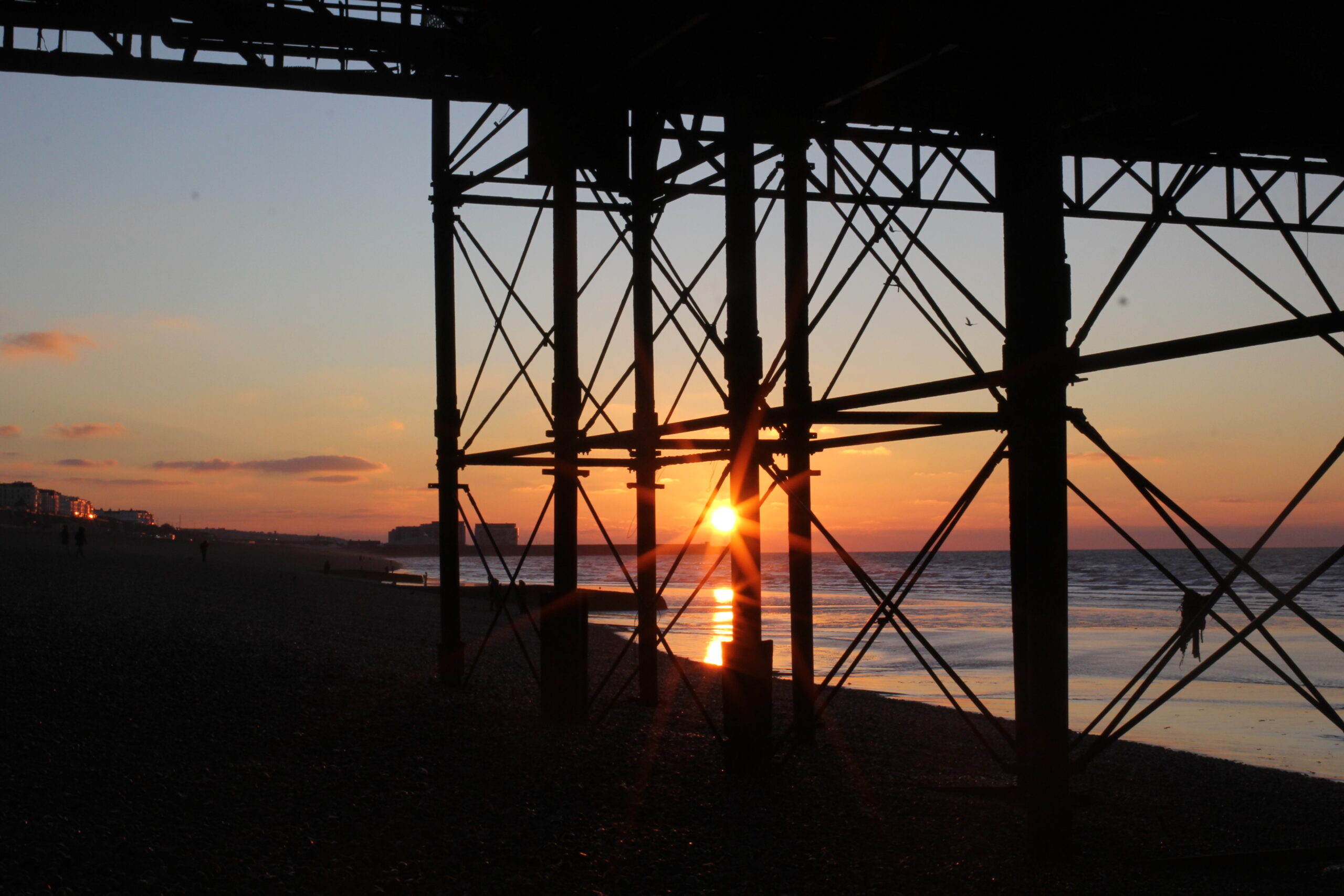
The West Pier remains a Brighton attraction, with many sitting along the beach to view the sunsets, accentuated by the stark contrast of the dark columns against the sky. Acting as a roost for starlings and other birds, the site is often made more attractive when the starling murmurations occur.
The Palace Pier
The only one of the three that serves as an active, interactive attraction is the Brighton Palace Pier. Construction took 10 years and has featured a pavilion, theatre and even a steamer landing stage since opening in 1899. The over 500 meter long Victorian work today is home to restaurants and bars, fish and chips, fairground attractions and arcades which attract tourists and locals every day. The first rides were supplied in 1932, within which a big wheel and dodgems were installed. During World War 2, the pier was guarded 24/7 to protect Brighton from being invaded via sea, and a section of it was removed. In more recent times, the Pier has been a filming location for Sam Smith’s music videos or a drama featuring Harry Styles. You may have first enjoyed the pier’s attractions, wandering around town for the first time, or potentially at the Pier Party hosted every year for the University of Sussex’s freshers week. According to VisitEngland, the Palace Pier boasted the 5th most popular free attraction in the country, with 4.5 million visitors recorded in 2014. The Pier returned to the charts as a top attraction on TripAdvisor in 2021.
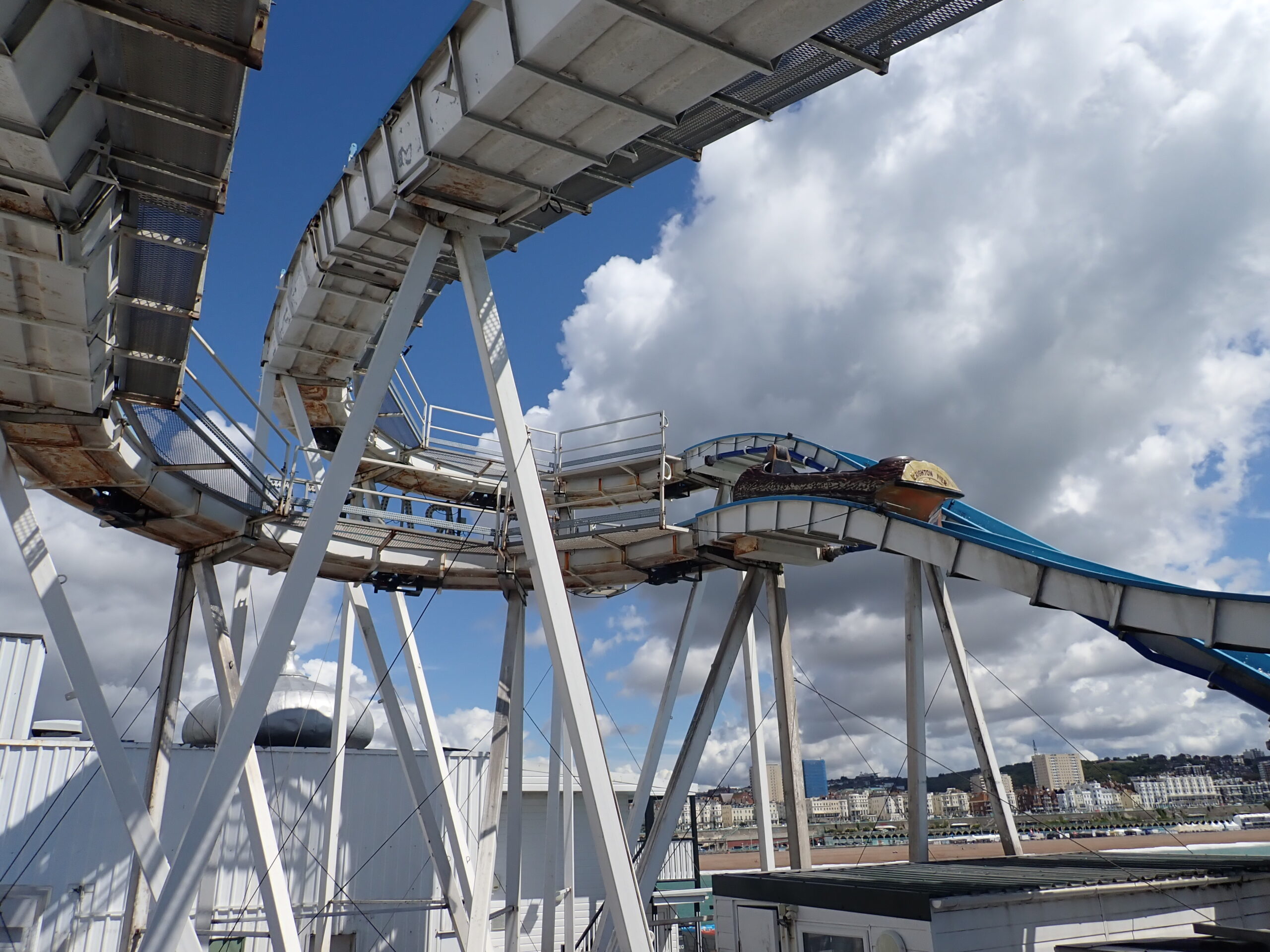
The last couple of decades have seen the Pier being put up for sale multiple times, and have seen many introductions of new rides and attractions. The sign you see today was designed by local Lucy Williams, who can also be given credit for the sign at Open Market. Installation of the sign heralded the return of the original name from Brighton Pier to Brighton Palace Pier. Today, the Palace Pier acts as a locale for a classic Brightonian experience, whether it be a fun day out, an ice-cream date, or a sunset-watching or starling murmuration spot. A personal favourite memory would be waking up early at low tide and being able to walk under the pier itself on the sand.
In the last few centuries, Brighton’s Piers have acted as important attractions and symbols of classic English seaside enjoyment, exciting inventions of each of their times and to some extent, influenced the rest of the colourful Brighton we know today. Whether the Pier is of interest to you as an attraction or not, it is certain that the current Pier and its predecessors are quite successful as attractions of Brighton and its seaside home.
