

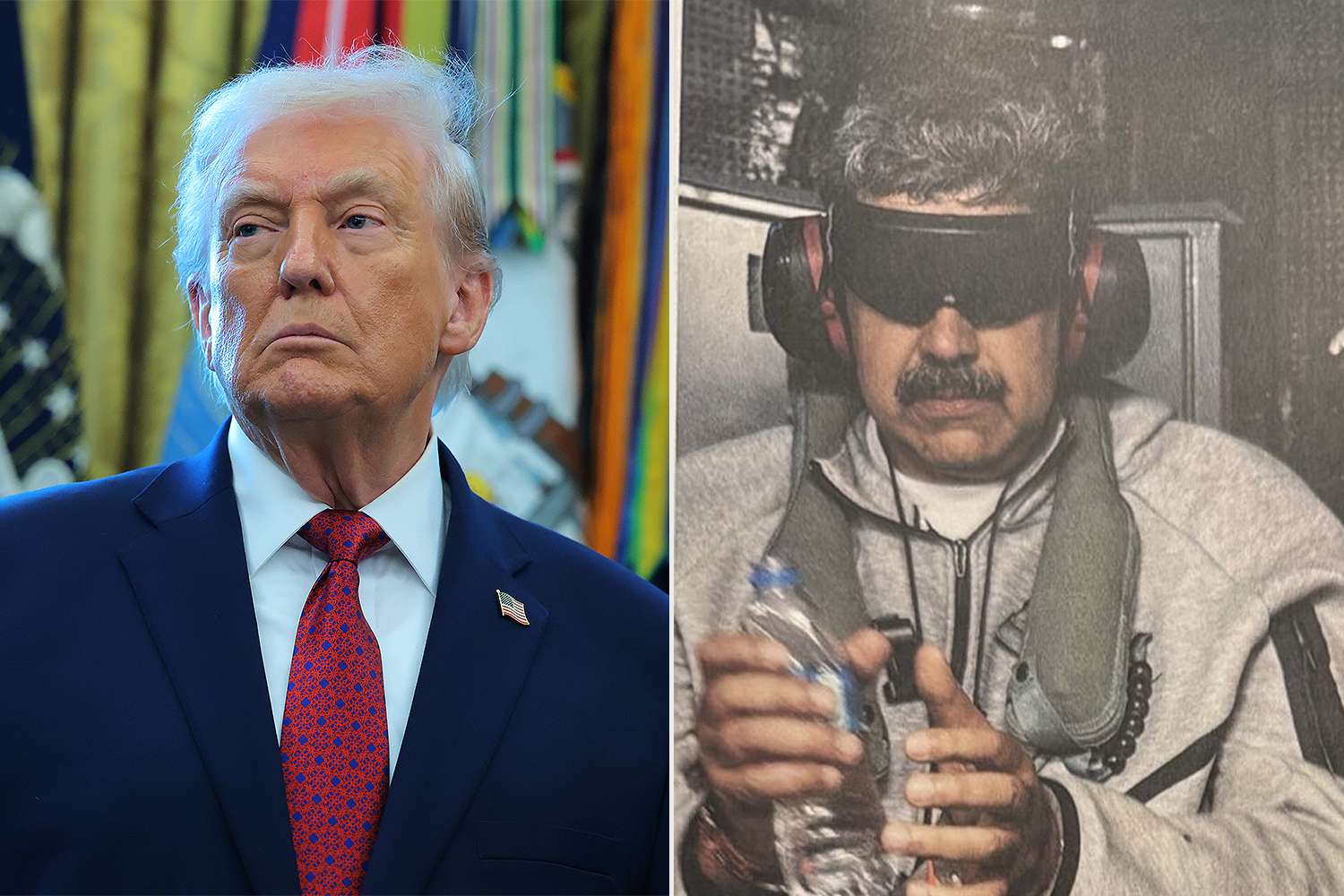
In the early hours of 3rd January, according to officials, the United States carried out military strikes in Venezuela and seized President Nicolás Maduro, along with his wife, to face US federal charges including alleged narco-terrorism and drug trafficking offences.
The Trump administration defended its actions, with Vice President JD Vance stating the operation aimed to protect the US from illicit narcotics. He outlined on X, “You don’t get to avoid justice for drug trafficking in the United States because you live in a palace in Caracas.” Secondly, on claims by some governments and NGOs that Maduro’s 2024 election lacked credibility, which formally recognised his opposition, Edmundo González, as the democratically elected president.
Finally, according to international energy statistics, Venezuela holds among the largest proven oil reserves in the world. In a press conference the day of the move, Trump said, “We’re going to have our very large United States oil companies … go in, spend billions of dollars, fix the badly broken infrastructure … and start making money for the country.”
In the same conference, Trump said the US would oversee governance and ‘run the country’, until a time as we can do a safe, proper and judicious transition.”
However, President Trump’s move has faced staunch opposition. Venezuela’s interim President Delcy Rodriguez initially stated that Venezuela would “never again be anyone’s colony.”
However, as reported by The Guardian, Rodriguez has recently been more accepting of the US, as well as wanting “shared development, within the framework of international law, and … lasting peaceful coexistence”. Some analysts suggest this shift may be influenced by Trump’s threats against Rodriguez, saying that she could “pay a very big price, probably bigger than Maduro” if she did not cooperate. It may also be due to the surprise suppression of 2025 Nobel Peace Prize winner María Corina Machado’s movement against the current Venezuelan government. Trump stated that, “she doesn’t have the support within or the respect within the country” to potentially take over the presidency, or for it to be given to González.
Additionally, some international law experts, including a UN rapporteur, have rejected claims that this was a “legal arrest”, instead highlighting breaches. Margaret Satterthwaite, special rapporteur on the independence of judges and lawyers for the UN, said to Al Jazeera, “One state cannot enforce its law on the territory of another state unless that state gives its consent.” This even applies despite the allegations of corruption and human rights violations against Maduro’s government, alongside his legitimacy being questioned. “If we allowed one government to go around the world saying, ‘Well, this person is legitimate, this is not. And since he’s not, I’m going to go grab him,’ you can see what kind of chaos would ensue,” she also stated, “one state cannot enforce its law on the territory of another state unless that state gives its consent”.
The considerable future of Venezuela, Trump says, is under American oversight. The NYT reports that after being asked how long the US would remain in power, Trump replied that it would likely be over a year. According to reporting, Prime Minister Sir Keir Starmer has not called America’s actions unlawful, instead opting to echo his “support for international law”, as reported by the New Statesman. Whether we shall see further escalation in the coming weeks and months, it remains to be seen.
For now, reports say Trump is allegedly seeking 50 million barrels of oil (£2.1bn) for US sale, and according to reports over 100 people have allegedly been killed during the operation, and one South American nation faces a very uncertain future.
Another article you may enjoy: https://thebadgeronline.com/2025/12/unsafe-to-study-raac-sussex-ageing-buildings/
