

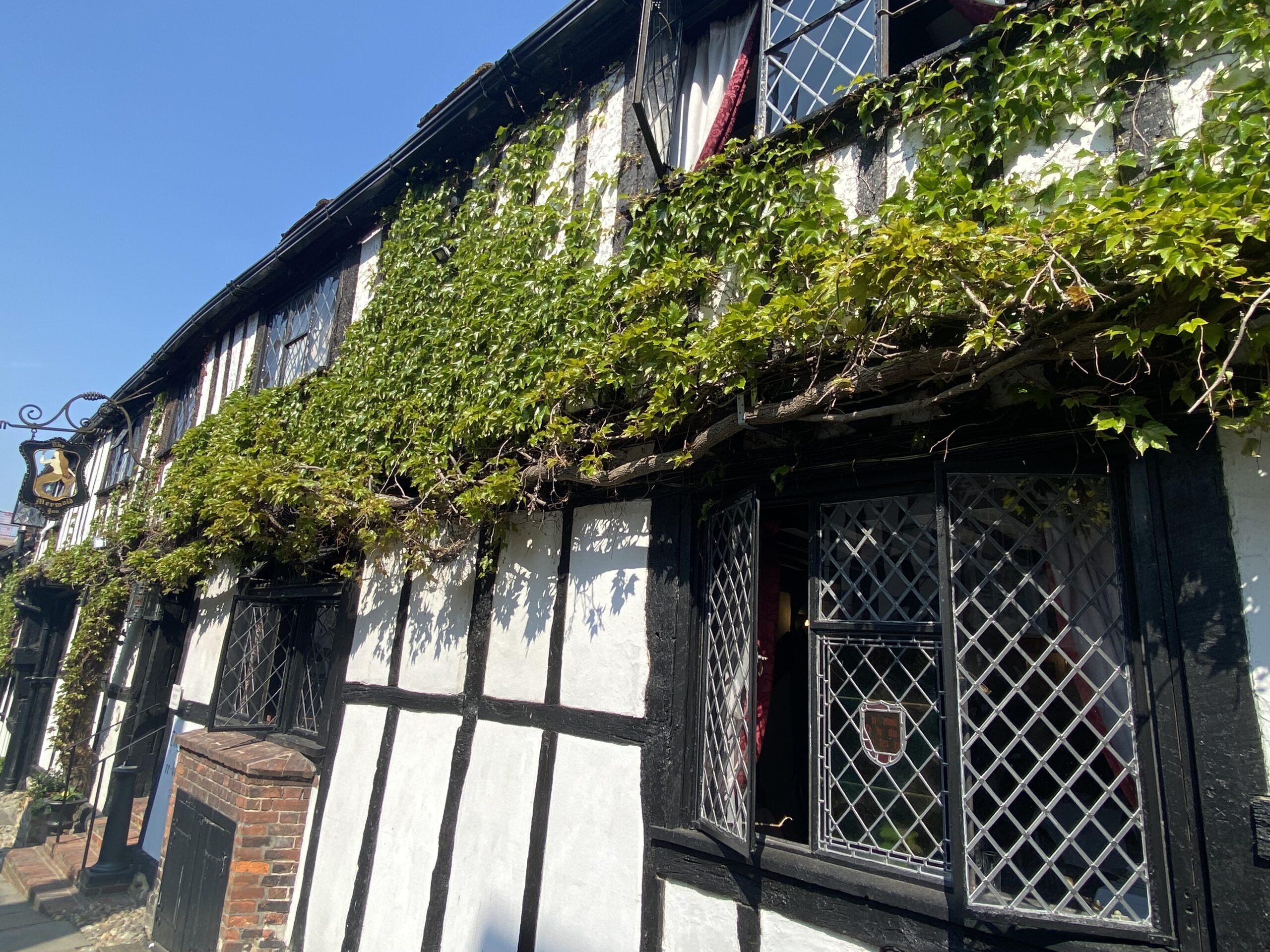
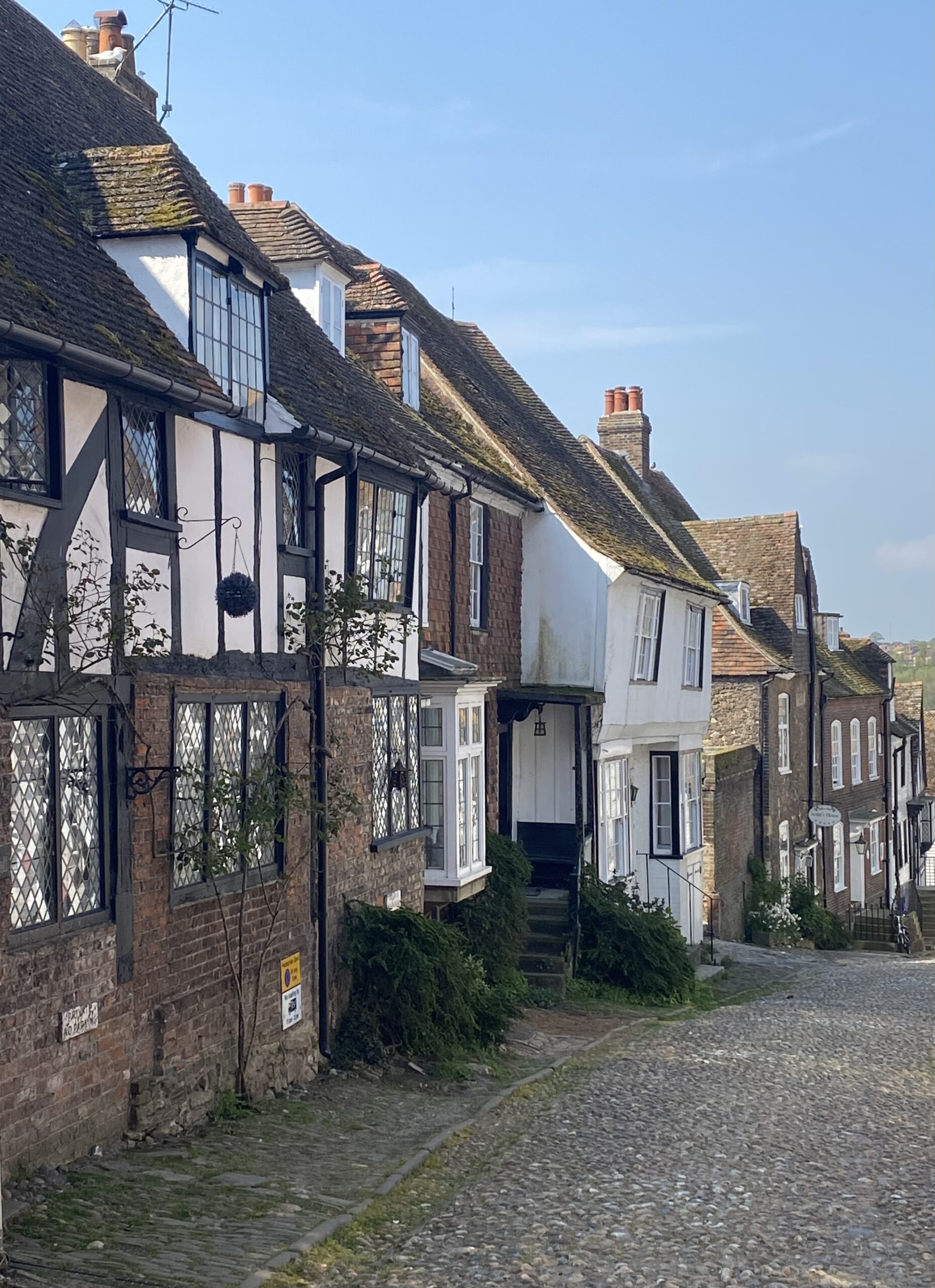
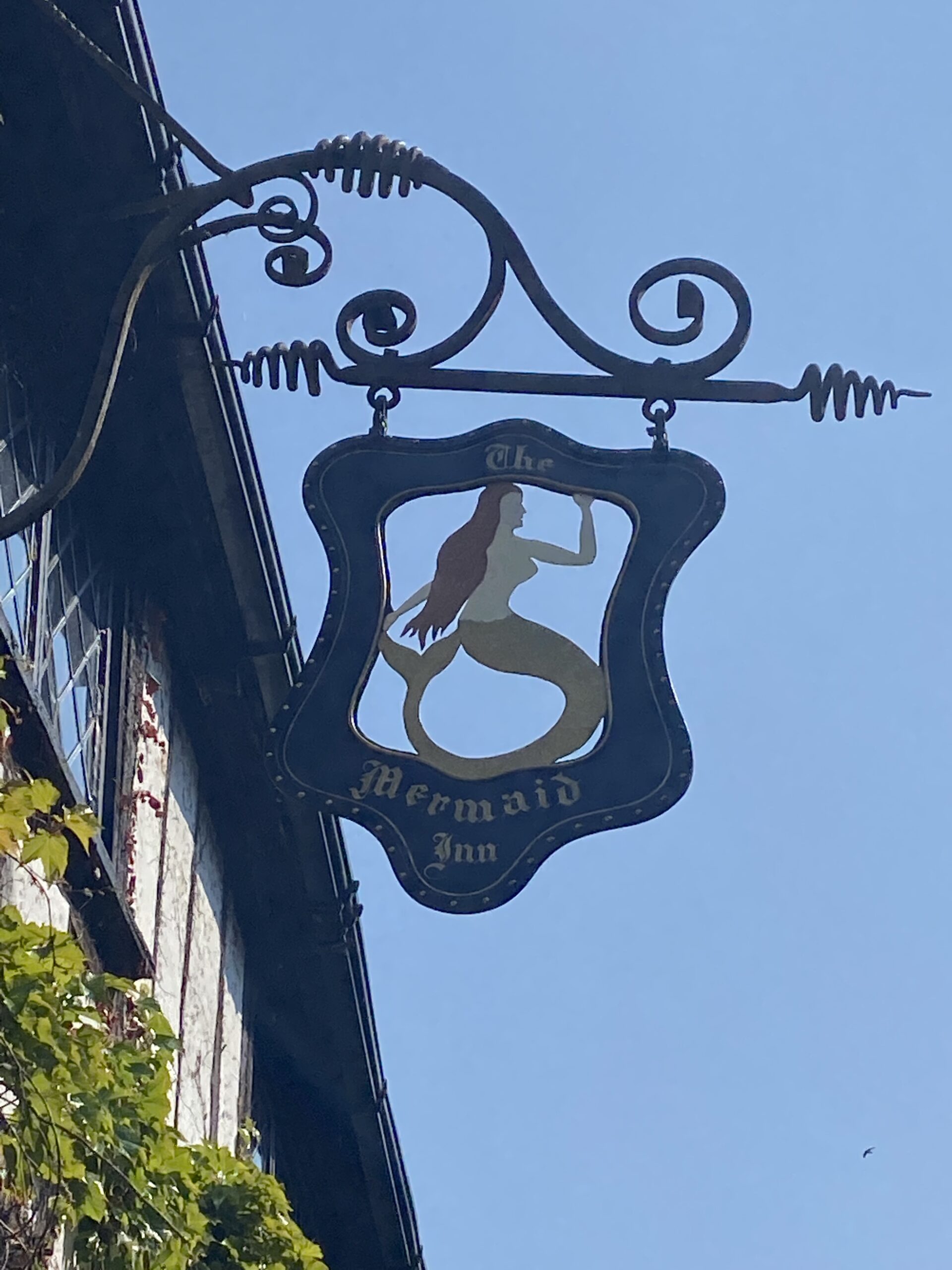
Formerly a coastal town in medieval times, today the town of Rye lies approximately 40 miles east of Brighton and 2 miles from the sea. Despite being the location of Lamb House, Henry James’s former home, and boasting the 13th-century Ypres Tower, tourists descend in particular to cobbled Mermaid Street. This is where the Tudor-style Mermaid Inn has stood since the 15th century, supported by wooden beams recycled from ship masts. It has been named one of Britain’s most haunted places.
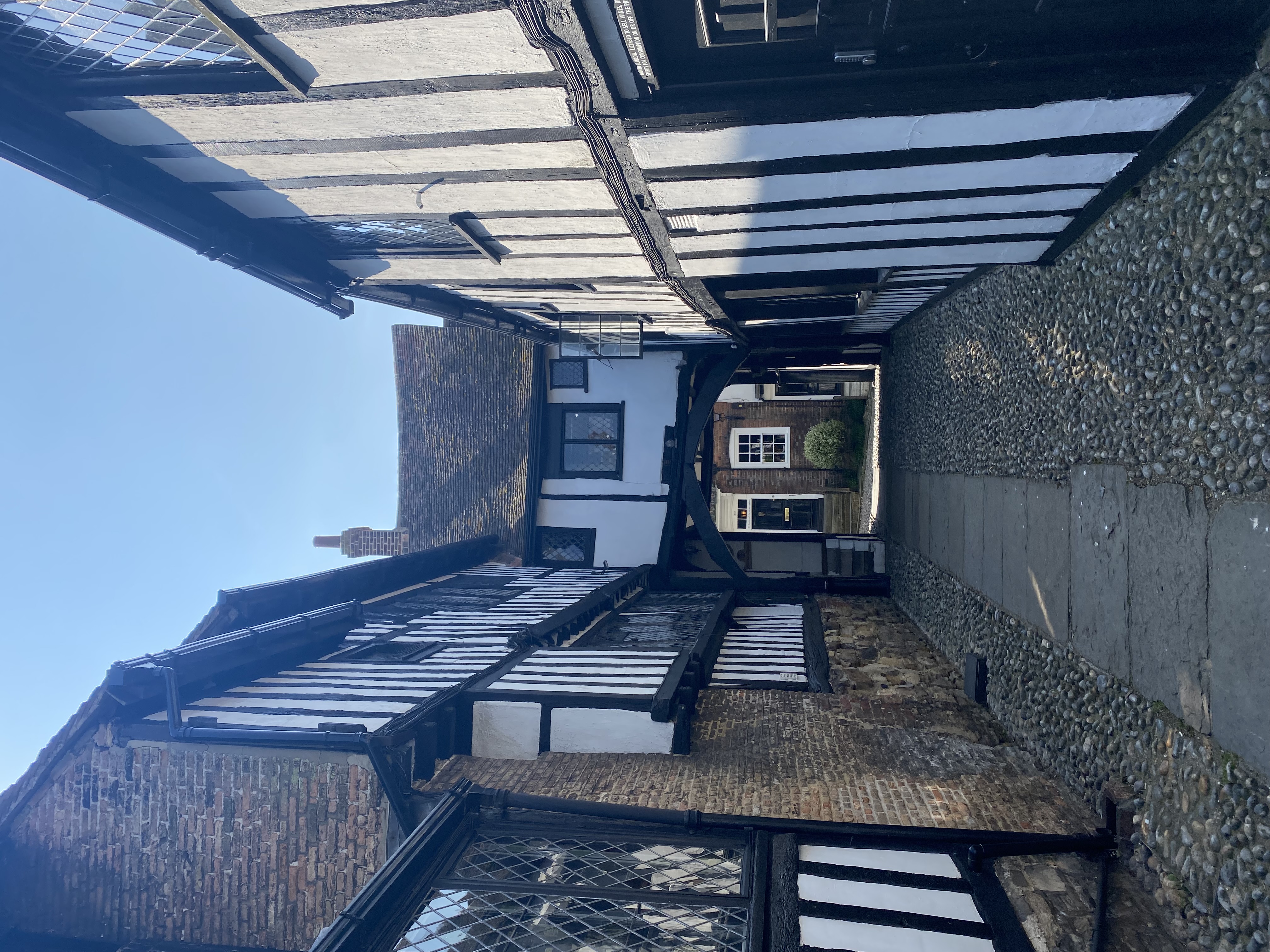
The oldest part of the Mermaid Inn — the cellars — dates from 1156. The Inn itself was reconstructed in 1420, after it was destroyed in a fire set by the French during a raid on the town. During the Reformation, Catholic Priests in hiding etched the initials ‘J.H.S.’ (or ‘Jesus Hominum Salvator’, a Catholic devotion) into the oak panelling in ‘Dr Syn’s Lounge’, the remnants of a makeshift altar. In 1597, the Mermaid’s owner, John Fowtrell, became Mayor of Rye.
To celebrate his inauguration, he paid 20 shillings to the Lord Chamberlain’s Men for a performance, and it is believed that Shakespeare’s company performed Love’s Labor’s Lost. In the mid-18th century, the Hawkhurst Gang, a smuggling ring active in the south-east, used The Mermaid Inn to store goods. They are said to have transported goods between the Mermaid’s cellars and the Olde Bell Inn in Rye (which dates back to 1390) through a secret passageway. Gang members were witnessed by a citizen of Rye “seated at the windows of [the Mermaid Inn]… with their loaded pistols lying on the table before them; no magistrate daring to interfere with them.”
Photos: Jessica Fancy
In 2010, a seance was held in Room 15 (‘Dr Syn’s Bedchamber’), conducted by a medium, and attended by current owner Judith Blincow and her members of staff. Blincow claims to have seen the face of the medium “change”, wherein it “grew on one side”. Participants were told that “a figure with a dog had entered the room and was standing in the corner”. They were invited to hold out their arm to the inhabited space. “Our arms actually disappeared into where, in theory, his body would be”, claimed Blincow. Those present “saw [her] arm disappear… it was just really, really bizarre.”
Further supernatural activity is said to have occurred in Room 16, or, ‘The Elizabethan Bedchamber’, named after Queen Elizabeth I, a guest at the Inn in 1573. Guests staying in its four-poster claim to have been awoken by medieval ghosts duelling in the middle of the night. The duel’s loser was then witnessed to being thrown down the stairs of the room’s secret passage, which leads to the Inn’s current Bar.
Judith Blincow, who started working at the Inn as a teenager in 1984 and nine years later, “just took a chance”, deciding to buy the Mermaid. Reflecting 32 years later, Blincow remembers how they “remortgaged our houses, I sold my car, and we borrowed a lot of money from the bank”. Nevertheless, she believes that “COVID was our biggest challenge”, and although she had “to cancel over 3600 reservations” and support “63 staff members who relied on us”, she has always avoided debt. The Mermaid stands today as an embodiment of Rye’s living history.
Another article you may enjoy: https://thebadgeronline.com/2025/12/brightons-christmas-markets/
