

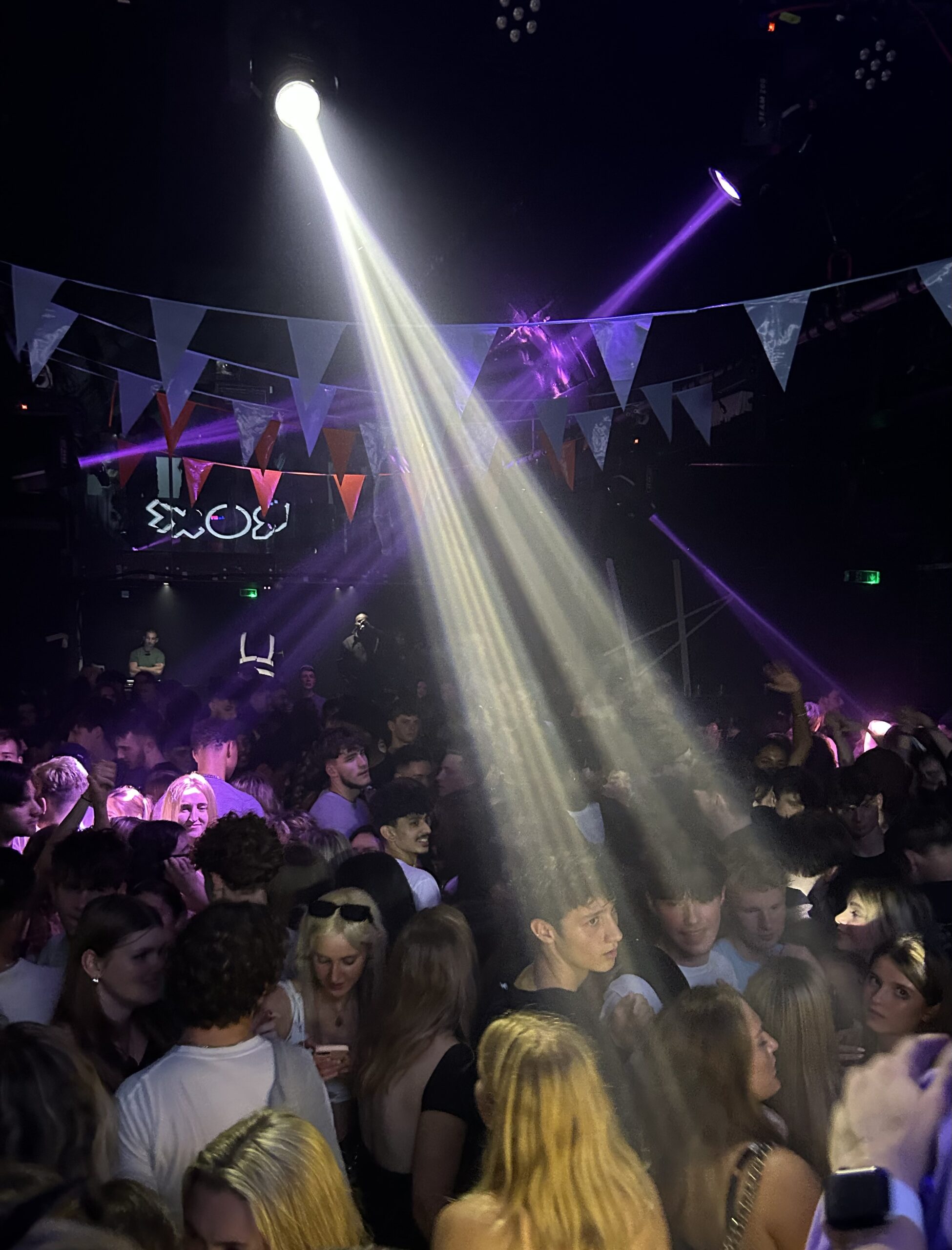
37 per cent of all clubs across the United Kingdom have permanently closed since the start of 2020. That is an average of three clubs per week, a rate that may not slow down until all clubbing spaces are closed by 2029.
The UK has undergone a substantial shift in nightlife norms as generations develop. In the early 2000s and 2010s, pop music was generally centred around partying: you had ‘Party Rock Anthem’, ‘DJ Got Us Falling In Love’, and ‘Just Dance’. Society was attracted to this exuberant party culture.
Nowadays, the club is rarely mentioned in mainstream music. The likes of Peggy Gou, Fred Again, and Charli XCX promote dance music through eccentric house and electro-pop, but they do not have the same demand that Rihanna, Flo Rida, or Lady Gaga had in the 2010s. Music is ultimately a cultural lifeline, and I believe that since the COVID-19 pandemic, there is an idealised concept of isolation among younger individuals.
COVID-19 exacerbated the self-isolating tendencies of the younger generation. Those aged 18-34 are shown to experience loneliness more than any other generation, and the music in the charts reflects this. Olivia Dean is currently topping the charts with her new album –a neo-soul record with cosy beats and poignant lyrics. Close behind her is Sombr, known for his atmospheric indie-pop sound; his name literally means dull and serious.
For Generation Z, social media certainly enhances the ability to connect people who then meet in real life, but it has gone too far. Digital media platforms are geared to keep us stimulated for hours, keeping us indoors. If we are distracted, we don’t feel the need to go out. Drinking culture is on the decline, revealing that one in five under the age of 25 is now not consuming any alcohol.
We are undoubtedly the most chronically online generation, but this goes deeper than digital media. Drinking culture is negatively correlated with the rise of social media usage – a higher risk of embarrassing photos on a night out, and a breach of personal security plays a role in deterring people from letting loose on the dance floor. People are more embarrassed nowadays, feeling pressure to behave in ways that impress others. We have an innate desire for external validation, and paired with the tendency to compare ourselves, fewer people go to the club to dance, and more go to film their friends.
What I believe to be the root cause of the decline of nightclubs in the UK is the cost-of-living crisis. Rents and business rates have skyrocketed, energy bills are increasing, and licensing rules are tighter than ever. Not to mention the fees that come with clubbing now: taxis, drinks, and cover fees are the basics, alongside the food you eat before and after, and the chance that accommodation may need to be sorted. People from small towns and villages often lack options for nightclubs, unless it means booking taxis and hotels for extortionate pricing
Clubbing culture is not the only part of a pre-Brexit UK that we have lost – the economy thrives when the middle class has disposable income, yet even those with money struggle to enjoy the perks of nightclubs. For example, table culture is dead – the bottles, the signs, the sparklers – people aren’t enjoying it anymore. As I mentioned earlier, social media has killed the excitement of in-person experiences, as everyone has now seen it already online.
The comparison to different cultures offers an interesting and perhaps promising take. For instance, Latino club scenes in the US are thriving, while destinations like Magaluf and Benidorm remain iconic for party-focused holidays. Vibrant cities in Southeast Asia, such as Koh Phangan in Thailand or Gili Trawangan in Indonesia, continue to attract young travellers from around the world in search of cheap drinks and warm weather.
At the core of the issue, I believe, is that people want experience – not extortion. Clubbing reflects civilisation and tradition, and as society shifts, culture moves alongside it. Clubbing is not dead, but you can argue the culture is not what it once was.
