

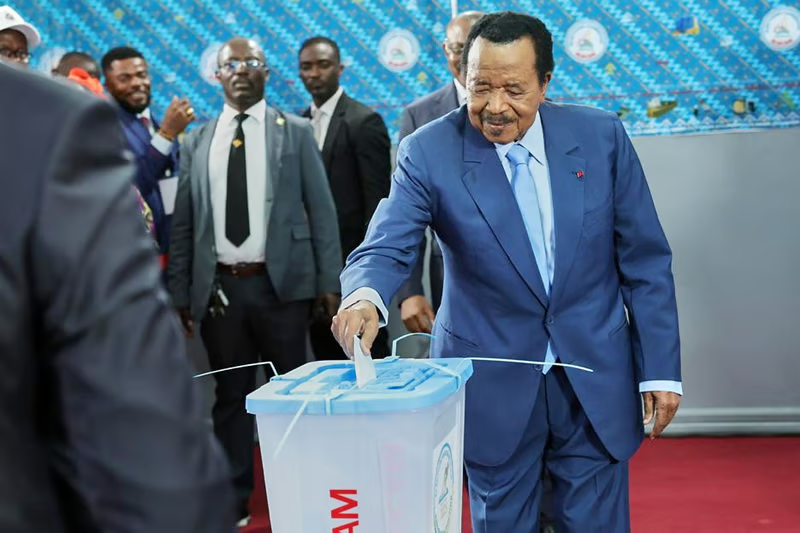
President Paul Biya was, unsurprisingly, re-elected as Cameroon’s President on 12 October. At 92 years old and ruling since 1982, Biya is embarking on his eighth term in office and is now a name synonymous with Cameroonian politics, a name that has been for four decades. An election marked by controversy, with the Cameroon People’s Democratic Movement (CPDM) alleged to use state funding for political patronage and to limit the activities of the opposition to rig the election.
Biya’s main challenger, Issa Tchiroma Bakary, hastily called an early victory on social media on 14 October, pressing Biya to concede. A day later, Tchiroma alleged vote tampering had taken place; protests broke out over allegations of electoral fraud; a ban on public gatherings was in effect, with businesses staying closed for fear of unrest; in Douala, Camtel, the state telecoms provider, has come under fire for internet restrictions it has blamed on a ‘technical incident’.
The re-election of Biya is something of a destiny for the country. The organisational advantages of the party’s long incumbency, its greater access to media and public resources to disadvantage opposition candidates and its dominance over electoral bodies mean it is realistically impossible for another party to be elected, according to Freedom House. Hence, the country will stay a one-party state for many more elections if systematic corruption isn’t addressed.
As people protested, security services were quick to respond. Reports from international organisations indicate that dozens of civilians have been killed since protests began, with many more injured. In some areas, security forces reportedly fired live ammunition into crowds. Opposition figures and human rights groups have accused the government of attempting to conceal the true scale of the casualties by removing bodies from public morgues and restricting access to certain neighbourhoods.
The results of the election have not only stirred questions about fraud and violence, but also reignited fault lines stemming from the long-running Anglophone Crisis, mostly in the English-speaking Northwest and Southwest regions. The first election since the eruption of the crisis in 2016 saw reports of Anglophone separatist fighters wreaking havoc in the streets of Bamenda, firing shots and threatening voters. These separatist forces are an evolution from originally peaceful protests surrounding the ‘imposition’ of French-speaking judges, teachers and administrators.
Many Anglophone separatists have long rejected participation in national political processes, including elections. In this cycle, armed groups reportedly discouraged voting, arguing that the system is stacked against them. Turnout in these regions was unusually low — a sign, for many, of a deeper boycott. Despite that, official results from those areas showed very high support for Biya: in some Anglophone districts, he allegedly received more than 80% of the vote. This discrepancy has fuelled accusations that the election was manipulated.
As Biya prepares to begin yet another term, Cameroon faces a deeply uncertain future. The combination of alleged electoral manipulation, violent repression, and an unresolved Anglophone conflict has left the country more polarised than ever. For many Cameroonians — especially younger generations who have known no other leader — the election has reinforced a sense of political stagnation and institutional mistrust. Whether the government chooses to address these grievances or continues to silence them will determine not only the stability of Biya’s new term, but the long-term prospects for peace, democracy, and national unity in Cameroon.
Another article you may enjoy: https://thebadgeronline.com/2025/12/roots-garden-reels-after-repeated-thefts/
